Category: Reporting & Business Intelligence

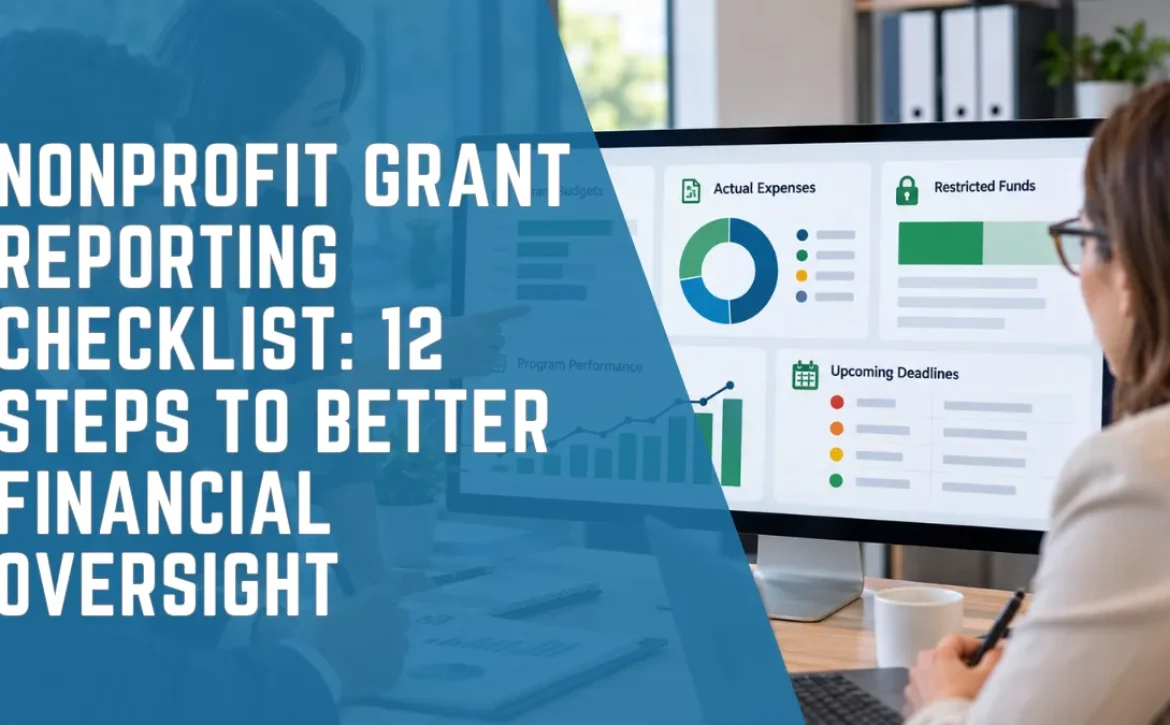
Nonprofit Grant Reporting Checklist: 12 Steps to Better Financial Oversight

Explore a practical grant reporting checklist to help nonprofits improve financial accountability, streamline compliance, track restricted funds accurately, and strengthen transparency with funders and stakeholders.

Read More

10 Important KPIs for Manufacturers

A KPI or key performance indicator is a way to identify how successful an organization is. By tracking key indicators, an organization can get a sense of how successful they are at meeting their primary goals. An organization’s primary goals are designed to drive a company towards success, so it’s natural that an organization would want to have some sort of indication that these goals are being met.

Read More

Great Dashboards Are Key to the Best Business Intelligence

business intelligenceSage Intelligence Delivers on Its Promises

Business intelligence solutions can help you find, assess, and use data aggregated from many departments within your company. The MIT Sloan Management Review reports that 91% of executives are either planning a big data initiative or have such an initiative in progress. Clearly, data and analytics remain an important component of business success.

One often overlooked part of the success of any business intelligence initiative is the user interface or the dashboard through which you manage the information received from the system. Without good dashboards, your data initiative may not be as successful as you hope it will be.

Reasons Why Data Initiatives Fail

Too much of a good thing is often just as bad as not enough of a good thing. That’s often the case with data where too much data can result in inactivity. Such “data fatigue” can lead to people abandoning business intelligence solutions before they’ve really given them a chance to succeed.

To reduce data fatigue, you can take several steps to improve business reporting. Implementing a standard reporting process is a great first step. So, too, is deciding upon a standard set of business reports that everyone agrees are necessary. This reduces the number of reports to a level all stakeholders can feel comfortable with and use.

The last step is one of the most important steps to reduce data fatigue and increase the usefulness of business reports. Building an executive dashboard that provides users with exactly what they want and need to know is the right step to reduce data fatigue and increase the usefulness of your existing business intelligence system.

The Power of Dashboards in Business Intelligence Solutions

Enterprise resource planning systems (ERP) provide data on various departments in your company. Business intelligence solutions such as Sage Business Intelligence aggregate the data flowing in from different areas into reports that can be viewed and shared to better understand the data.

To get the most out of your business intelligence solution, it is vital that you build dashboards that suit the needs of the users. There’s often a push for a “one size fits all” dashboard from well-meaning IT folks, but users need the flexibility to customize their dashboards for their unique role in the company and the information that is most useful to their jobs. The CEO needs very different information than the warehouse manager, for example, and each person should have a dashboard that reflects those needs.

To build a useful and powerful dashboard for your business intelligence system, use the following questions as a guide.

  • What do you want the dashboard to do?
  • What are your goals for business reporting?
  • How will you measure the success of business reporting?
  • What metrics should we measure? What do you care about?
  • Which metrics do you use frequently?

The answers to these questions can help you determine what should be prominently displayed on the dashboard and what may be kept in a secondary drop-down menu or another place on the user dashboard. Prioritize the features and functions that people need and you’ll build dashboards that are useful and easy to understand.

Tips for Building Great Dashboards in Business Intelligence Systems

  1. Prioritize based on action. Emphasize data on the dashboard upon which executives can take action. Although executives might be curious about website data, if they aren’t going to take action on the numbers, don’t include them on the dashboard. Instead, talk to your executive team about their most pressing concerns and make sure that the data they need is front and center.
  2. Keep navigation and views simple. Another tip for building executive dashboards for business reporting is to keep them as simple as possible. Don’t try to do too much on one dashboard. Keep it to about one page. Remember that people do not take the time to read the text. Simple icons and short text blurbs that provide as much information in the shortest time-frame possible are ideal ways to organize a dashboard so that it will be used frequently for business reporting.
  3. Use sub-menus for depth. Another way to make business reporting dashboards indispensable for executives is to add depth to the reports. Instead of just data, make it useful data. Add annotations, explanations, and visualizations that enhance data so it can convey as much information as possible at a glance.

Context is also important for adding depth. The context through which reports are viewed can help users make accurate conclusions. Provide as much context as needed to help people understand the parameters of the data shared and how to use it effectively.

Sage Intelligence: Business Intelligence Redefined

Sage Enterprise Intelligence can help you overcome that feeling of being lost in a sea of data. This business intelligence solution integrates easily with Sage EM (formerly known as Sage X3), Sage 300cloud (formerly known as Sage 300), and most ERP systems for a seamless experience from day one. You can tie multiple databases together for real-time reporting and manage reports, sales pipelines, and more with drag and drop functionality.

Take a test drive today of Sage Enterprise Intelligence with IWI Consulting Group. You’ll never go back to your old method of business intelligence reporting again once you’ve tried Sage Enterprise Intelligence.

IWI Consulting Group helps Canadian businesses and non-profits choose and adapt the best enterprise resource planning (ERP) software for their needs. Small to mid-sized companies will find the help and resources they need to choose the right software at the right value. For more information, visit IWI Consulting Group or call 1-866-916-3851.

Read More

Sage X3, a Comprehensive Analytics Solution

Sage X3Some companies run on gut instinct. Others run on data. If your company falls into the latter camp, welcome to Sage X3 Data Management and Analytics, a comprehensive analytics solution for insights-driven organizations.

Sage EM (formerly known as Sage X3) Data Management and Analytics offers a comprehensive portfolio of analytics with the ease of an out of the box solution. Deep integration with other Sage software enables Sage X3 Data Management and Analytics to manage data and extra insights without cumbersome technical programming. It’s easier to set up than many other data analytics programs, making it a favorite for companies who crave data but have little time for custom programming.

Let’s take a look at some of the features Sage X3 Data Management and Analytics offers.

  • One analytics solution: The software takes multiple data inputs and generates outputs through dynamic role-based dashboards, Sage BI dashboards and reporting, and other BI tools, as required. It’s one solution to the problem of multiple BI needs.
  • Easy deployment: One pre-packaged solution makes deployment a snap. Various models include cloud, on-premise, and hybrid models. Pre-set data models for Sage X3 and other ERP and CRM applications offer better deployment options.
  • Seamless integration: This tool is built to integrate with other products—especially Sage products—but other systems, as well. Out of the box integration with almost any data source makes it quick to set up without a glitch. You can also add additional data sources later.
  • Data modeling: Powerful data modeling capabilities enable you to make customized data reports, automate data cube and warehousing, and much more.
  • Data governance: Govern data carefully without intrusive systems through its built-in data governance tools. Enterprise-quality controls enable you to securely set permissions, adjust access and permissions, and control who sees and changes data.
  • Fast analysis: Self-service reporting puts you in control of outputs. Role-based dashboards, industry-standard best practices and more are all built into the system.

These features make Sage X3 Data Management and Analytics a must-have tool for companies set on growth. You can’t manage what you can’t measure, and lack of available data makes it difficult for companies to set a course for growth. With Sage X3 Data Management and Analytics, you have what you need to set KPIs and measure progress towards them. More importantly, you are empowered with information and self-service capabilities that help you make the system what you need it to be. It’s flexible and offers exceptional data visualizations for better insights.

Transform Your Company

Many companies seek to become data-driven businesses but difficulty finding, accessing, and using data can make it hard to take the final step. If you can’t trust your data or you can’t find what you need, it becomes next to impossible to make decisions based on data.

Sage X3 Data Management and Analytics can shift this paradigm into one in which not only can you trust the data that you see, but you can make it your own. With customized dashboards, the CEO’s view is different from the Marketing Manager’s view, but each gets to see the metrics vital to their roles within the company. The result is a tool that not only supports better decisions but makes data the basis from which business decisions are made.

IWI Consulting Group

IWI Consulting Group helps businesses gain insights into their operations, inventory, and profitability. We provide software and support for a wide range of industries throughout Canada. For more information, please visit IWI Consulting Group or contact us today.

Read More

Tips for Better Business Intelligence Presentations

business intelligenceYou can improve your business intelligence presentations to executives, directors, peers, and subordinates by using tips and techniques found in the world of education. Many people are unfamiliar with the term “learning styles” but understanding this core concept and applying it to your presentation techniques will help you deliver better presentations that resonate with your audience.

What Are Learning Styles?

Educational theorists created a system of learning styles to describe the ways in which people prefer to learn. Your learning style is innate, and you probably recognize your own style in the descriptions below. Most people have a predominant style that they naturally gravitate towards when engaged in self-directed learning. Because the Western school system is heavily auditory (lecture-based) and visual (textbooks), many people who are kinesthetic or tactile learners learned early on to compensate by relying heavily on their secondary preference. No matter what your preference, there’s no one right or wrong way to learn.

The three basic learning styles are described as:

  • Auditory: Auditory learners need to hear information to process it. They understand business intelligence most during your presentation and retain information best when it is spoken aloud.
  • Visual: Visual learners learn best by seeing information in charts, graphs, or other pictorial representations. These members of your audience will eagerly read your full report.
  • Kinesthetic: Also called tactile learners, this group must handle the data in order to understand it. This can be accomplished through role plays, simulations, or even colorful anecdotes that help your audience grasp key points.

Think back to your school days and to the teachers you liked the best. These teachers probably used techniques that appealed to all learning styles, not just one. That’s how the best presenters earn their reputation, too: they use different techniques during meetings or lectures to engage with their audience’s learning styles.

Business Intelligence Reports: Presenting with Flair

Presenting data found within business intelligence reports comes with its own set of challenges. You may need to frame the data with information so that the report makes sense. Setting the stage for the backstory, the data, and the interpretation can all help your audience understand business intelligence data.

You can use learning styles to present business intelligence data with understanding, sympathy for learners’ natural inclinations, and flair that makes them memorable.

  1. Provide graphs, especially bar graphs, line graphs and pie charts: These visual representations of business intelligence data are most easily understood by your visual learners.
  2. Stage a demonstration: To show that a technology investment will repay the company five-fold, ask someone in the audience for a dollar bill, and hand then back a $5 bill. Your kinesthetic or tactile learners will immediately grasp the concept in a deeper way than just stating the data aloud, which appeals only to the auditory learners in the group.
  3. Read key points from a summary document for your auditory learners, and include a Q and A session at the end of the presentation.

When you break up a presentation by appealing to various learning styles, you’ll not only meet your audience’s needs better, you’ll create a truly memorable impression. Staging a visual demonstration of the reports’ impact or acting out a data report may sound corny (and may be hard to pull off) but it will certainly be memorable.

Business Intelligence Made Better with Sage Enterprise Intelligence

Sage Enterprise Intelligence eliminates the time and labor-intensive work needed to build great reports by automating business intelligence in one sleek, streamlined system. Fast reports mean data gets to you in time to make better decisions. When every minute counts to act upon business intelligence, Sage Enterprise Intelligence offers a valuable resource for many companies in various industries.

Business Intelligence Systems from IWI Consulting Group

IWI Consulting Group is a Canadian-based consulting resource group that assists for-profit and non-profit organizations with the difficult decision to choose enterprise resource planning software and related software. These systems and software improve business productivity and efficiency. For more information, contact us today or call 1-866-916-3851.

Read More

Break Down Silos with Sage Enterprise Intelligence

Sage enterprise intelligence Sage Business Intelligence draws information from Sage 300cloud (formerly known as Sage 300) and Sage EM (formerly known as Sage X3), tying multiple databases together into one robust system. The result can break down department silos, as the report states, improve productivity and efficiency, and increase your profits.

Why Do Silos Occur in Business?

Business silos are something with which many people are familiar. Departments cling to their data and make others run circles to access it. In other scenarios, the data exists, but only one or two people know how to run the specific system to access it. The resulting information bottlenecks can throw off schedules, decrease productivity, and derail efforts at creating data-driven cultures.

Silos can be a result of poor technology infrastructure as well as people’s emotions and psyches invested in their role as gatekeeper over information. Some people subtly cling to older systems because their ability to access data gives them power in an organization. Others simply don’t know that alternatives exist. If your company has always operated in a specific way, and it does not know that there are better, easier ways of completing the same tasks, it might be difficult to make a change.

New Systems Foster Collaboration

The white paper provided by IWI Consulting emphasizes how new business intelligence systems foster collaboration and break down silos within organizations. Business intelligence data through systems such as Sage Enterprise Intelligence tie multiple data bases together for real-time operations.

Because data is no longer kept separate, it no longer requires separate access to obtain it. Everyone within the organization can find and use the same data.

Data can also be viewed across multiple platforms. This big-picture view fosters collaboration and cohesion among the teams at your workplace, ensuring that everyone is working from the same data source to form conclusions.

Lastly, an important benefit from such systems is the ability for them to alert managers of critical situations. Supply chain management becomes easier when you’re aware of low stock levels. Orders can be fulfilled more rapidly if you know how much you have in the warehouse, and so on. Data that is no longer contained in silos becomes a powerful ally.

Insights Originate from Many Places

It’s rare that insights arise from just one person within an organization. When managers throughout your company can access shared data, they have the information needed to make better decisions. These insights can be shared across teams, fostering collaboration among different groups to solve business challenges and create new plans and ideas.

Delivering True Data Visibility

Business intelligence solutions deliver true data visibility. By merging ERP and other systems, and providing insight into multiple data streams gathered from throughout the organization, it can deliver data visualizations and reports that help you see the big picture or drill down into the details.

The emergence of newer business intelligence solutions, powerful ERP tools, and other accounting, finance, operations, inventory, sales, and marketing databases has the potential to completely transform businesses. Manufacturers can especially benefit from improved visibility into supply chain management, inventory, and sales data.

By using these new tools, your business can remain competitive, utilize resources more effectively, and increase profits. But it all starts with the right business intelligence solutions.

 About IWI Consulting

IWI Consulting offers numerous Sage products to enhance your organization’s data-driven culture. Sage EM (formerly known as Sage X3), Sage 300cloud (formerly known as Sage 300), Sage Enterprise Intelligence and many other systems can transform how you use data in your organization. Manufacturers will find their productivity increases as data becomes more available throughout their organizations. For more information, call IWI Consulting at 1-866-916-3851.

Read More

Easy to Use Business Intelligence Solutions

business intelligence solutionsMany companies seek to become “data-driven” enterprises. Business intelligence solutions can be an integral part of a data-driven culture. Their user-friendliness ensures that even the “non techie” people in your organization can learn how to use them for maximum benefit.

Creating a Data-Driven Culture

Many companies in the manufacturing area are transforming how they make decisions. Changing towards a data-driven culture may not be easy, but business intelligence solutions can make it easier.

The right business intelligence solutions combine accurate data, real-time updates, and simple dashboards that make logical sense for even novices to navigate. Such dashboards enable everyone—at all levels of the organization—to find, use, and understand the data inputted into the system.

To create a data-driven culture, data must not only be freely available to all, but it must be easy to use. Without ease of use, data remains untapped. Priority must be given to installing systems that work well for the majority of users.

Weaning Users Away from Spreadsheets

Many businesses have used spreadsheets to capture, analyze, and manipulate data. Spreadsheets are readily available, easy to use, and inexpensive. However, they lack the power that business intelligence solutions provide, and are open to mistakes.

Most spreadsheets require manual input of data. Manual stock-taking during warehouse inventory, for example, must be keyed into spreadsheets. If the typist makes one error, the error can multiply throughout the spreadsheets. It can then render business data inaccurate and throw off conclusions drawn from the data.

Spreadsheets can also be cumbersome when multiple data streams must be combined to form new conclusions. It can be difficult to get spreadsheets to communicate and share data accurately across worksheets; impossible across files. Time-consuming data manipulation compounds the frustration and renders real-time data impossible.

Business intelligence solutions tackle these tasks for you. Automated warehouses and inventory systems using barcodes can scan and input data quickly and accurately without the typical keying mistakes frequently seen in manual operations. Multiple data streams can be brought together and transformed into actionable insights through business intelligence solutions.

If you are struggling to convince your team that business intelligence solutions are better than spreadsheets, point out to them the amount of time (and frustration) they experience every time they are tasked with data manipulation. A simple demonstration of the power of business intelligence solutions may point out the flaws inherent in spreadsheets and convince even the skeptical that a data-driven culture, supported by a robust BI system, provides better support for decision-making at every level of the organization.

Sage Enterprise Intelligence

Sage Enterprise Intelligence provides powerful insight into your existing data. It merges multiple data sources including Sage 300cloud (formerly known as Sage 300), Sage EM (formerly known as Sage X3) and other CRM, accounting, finance, and operations data to provide big-picture and drill-down insights. Improved accuracy, access, and timeliness of data enhances your ability to make decisions. Data visualizations also add powerful information to the data so that anyone in the organization can access and use it effectively.

About IWI Consulting

IWI Consulting offers numerous Sage products to enhance your organization’s data-driven culture. Sage EM (formerly known as Sage X3), Sage 300cloud (formerly known as Sage 300), Sage Enterprise Intelligence, and many other systems can transform how you use data in your organization. Manufacturers will find their productivity increases as data becomes more available throughout their organizations. For more information, call IWI Consulting at 1-866-916-3851.

Read More

Surprising Benefits Derived from Sage X3 Business Intelligence

Sage Enterprise IntelligenceMany business owners seek a competitive advantage through better business intelligence. Business intelligence solutions, such as Sage Enterprise Intelligence can provide you with big-picture data of your organization’s performance. Such data enhances your ability to make timely, accurate, and judicious decisions.

These decisions aren’t limited to the big picture, however. Every portion of your business, from the warehouse floor to the manufacturing area, benefits. The more data your managers have, the better they can do their jobs.

There are many surprising benefits to be derived from the implementation of new business intelligence solutions. Sage commissioned Forrester Research to analyze data from a representative sample of companies on their implementation of Sage X3. The resulting analysis showed abundant benefits and cost-savings. Some, however, were surprising.

Three Surprising Benefits from the Implementation of Sage X3 and Enterprise Intelligence

There are dozens of benefits your company gains from implementing business intelligence solutions. But three surprising areas include:

  • Automating compliance
  • Improving processes
  • Enhancing availability of data.

Automating compliance: Many companies have stringent approval processes over items such as discounts, price breaks, returns, and other areas that directly impact the bottom line. Workers, however, find themselves chasing down managers for approvals, sending myriad reminder emails, or making countless telephone calls to get orders and discounts approved in a timely manner. With Sage X3 automated alerts and messages, information alerts can be set up to remind managers that approvals are waiting in the queue. Instead of wasting time chasing down a manager, the system does it for you, speeding up the process and freeing the employee’s time for other tasks.

Improving processes: Business intelligence solutions can also be used to improve existing processes. One company that participated in the Forrester Research study found significant benefits from improving their sales processes using Sage X3. This company offered varying discounts, many of which had to approved locally or specifically when requested by a sales team member. By automating the process and providing a standardized discount structure from which the sales people could choose, the system eliminated the tedious approval process by providing structured, pre-approved choices to choose among for each sale. This process improvement saved considerable time for the sales people and improved customer service throughout the organization by speeding up the entire order process for the customers.

Enhanced data availability: Prior to automation, many companies kept important information such as copies of purchase orders or receipts in a central office. Field staff trying to check on a problem with a customer order or even just looking up the customer’s order history had to call the central office to have someone there look up the information. If the information was kept in hard copy only, that may mean a delay while someone tracked down the location of the documents. Today’s cloud-based business intelligence solutions retain this and other relevant information on the database itself. Because they are cloud-based, the sales team can access them using their mobile devices, tablets or laptops. It’s much easier to communicate, share, and retrieve data through business intelligence solutions.

 Learn More About the Benefits of Sage X3 Implementation

IWI Consulting is now offering the full copy of this important report on the many benefits and cost-savings of sage X3 implementation.

IWI Consulting provides Sage X3 and Enterprise Intelligence software, along with other tools for business insights, management and data. Call IWI Consulting at 1-866-916-3851 today.

Read More

Sage Enterprise Intelligence: Opportunities for Manufacturers

The right business intelligence software can unlock opportunities for manufacturers. Sage X3 with Sage Enterprise Intelligence can help you collect and share business insights that drive decision-making.

Opportunities Are All Around

We often feel locked into our typical methods of conducting business simply because we’re focused on the daily needs of our companies. Manufacturers are especially keyed into daily sales quotas, supply chain demands, shipment needs, and so forth. It’s hard to take a step back and look at the big picture.

Business intelligence software like Sage Enterprise Intelligence can change that paradigm. Using the data generated by different points within your company, Sage Enterprise Intelligence can share the data and help you make predictions about where to expand your company, how to grow it beyond current capacities, how to leverage customer relationships, and more.

Sage Enterprise Intelligence can’t, by itself, make your business more responsive and profitable, but the right business intelligence software puts the right tools into the hands of your key team players. They can then use those tools to grow your company bigger and faster. Real-time data, provided to people with the experience, insight, and ability to use it to make decisions, can change how your business performs.

Business Insights Worth the Investment

A new white paper from Sage indicates that manufacturers truly value business insights. Among those surveyed, 100 percent agreed that their investment into business intelligence software saw improvement as a result of those investments. Many cited the information gleaned from business intelligence software as the change that helped them exceed revenue goals.

Typical business insights that you can gain from software such as Sage Enterprise Intelligence with Sage X3 include:

  • Real-time updates at every stage of the supply chain so that manufacturers can make informed decisions.
  • Insights into customer relationships, so you can grow and expand your customer base from the knowledge gleaned about your existing customers.
  • Better information on shipments, orders, fulfillment, and returns so you can plan and forecast more effectively.

The right data can help you make better business decisions. With better insight, you can forecast new markets, improve sales in existing markets, predict trends, and plan on manufacturing new products. It’s amazing how accurate and timely data can transform your business.

Not only can the right data transform current manufacturing processes, it can also improve forecasting. Forecasting is part art and part science, but it always relies on having an accurate picture of past and current performance. With such data, your management team can improve their forecasting ability, leading to lower costs and greater profits.

Businesses Grow Through People

It’s not just the data that are important. It’s the people using the data who are key to building a better business.

Good data must lead to actionable insights or else it’s irrelevant to your business. You want data that are accessible by all, but data that can be used by anyone who needs it. Insights, reports, and data visualization tools can all make data more useful to the end users in your company, the ones who need it the most.

Ready to Grow Your Business? Learn More

IWI Consulting helps businesses select and implement new business intelligence systems that provide actionable, real time data. With good data, your business can grow. Learn how other manufacturers are using Sage Enterprise Intelligence, Sage EM (formerly known as Sage X3), Sage 300cloud (formerly known as Sage 300) and other software for business intelligence, planning and more.

IWI Consulting can help your manufacturing business grow through solutions such as Sage Enterprise Intelligence, Sage EM (formerly known as Sage X3), Sage 300cloud (formerly known as Sage 300) and others. These solutions provide powerful data services to help you better manage processes, people and resources for productivity.

Please contact us today or call 1-866-916-3851 for more information.

Read More

Improved Reporting One Benefit of Enterprise Software

If you’re making an economic case for enterprise software, improved reporting is an attractive benefit. Accurate, timely and reliable data can transform a business’ outlook, and help its leaders make intelligent decisions to steer the business on a course for growth. But if your reports are difficult to understand or not providing the data that you need, you may be missing many opportunities.

Take a look at your current business reports. If you find yourself combining numbers in spreadsheets to make reports you can actually use, it’s time to take a serious look at new business systems that offer easier, more accurate reporting options.

A new white paper from Sage offers insights into conducting a cost-benefit analysis for enterprise software that may be helpful to you. As you study the many benefits and potential costs, improved reporting may be a benefit your company can profit from for many years to come.

How Enterprise Software Improves Reporting

Companies can be awash with data. Good reports translate that data into easily understandable information.

Enterprise systems such as Sage 300cloud (formerly known as Sage 300) and Sage EM (formerly known as Sage X3) offer customizable, flexible reporting solutions for different types of companies and industries. Departments who may need to paint different data pictures can choose from among a palette of customized reports that suit their needs.

One of the many areas in which Sage 300cloud (formerly known as Sage 300) and Sage EM (formerly known as Sage X3) add value is in their reporting features. These tools offer many options to customize the reports your teams use. They also enable cross-team features to integrate data in various ways that can help business leaders make important decisions.

It’s not just the information itself that’s so critical to your company’s future. Making information easy to understand is another way that enterprise software improves reporting. If most employees can understand the reports quickly, they can use the information immediately. Training can round out any gaps in their understanding of how to read, interpret and use the reports.

Replacing manual reporting systems with enterprise software makes sense if improved reporting is among your company’s priorities this year. Think of the time, effort and money that improved reporting can save you. Now you understand why this is one of the many benefits included in the white paper’s suggestions for the cost-benefit analysis.

Other Tips Included in the Paper

After conducting an economic cost-benefit analysis, there are other steps to ensure that enterprise system implementation goes smoothly. The whitepaper also provides suggestions for setting and managing employee expectations.

Employees may expect an ERP system to do more than it actually can. It can’t replace creative thinking, for example. It can provide actionable data that may fuel new creative projects, but it takes your staff to make that happen. Setting expectations before enterprise software implementation is important to prevent erroneous assumptions about what such a system can and cannot do.

Lastly, the new paper includes tips for making the most out of your ERP investment. Clear goals, comprehensive training so that people use the system’s many features, and regular assessment of the enterprise software’s value to the organization can help you make better decisions for your company.

When the ROI exceed the TCO, you know you’ve got a winner. Through careful consideration, needs assessment, cost and benefit analysis, you meet your goals with an enterprise software solution.

Enterprise Software Consulting from IWI

If you’re not sure where to start with your cost-benefit analysis, contact IWI today. We offer comprehensive ERP consulting that includes a discussion of the challenges your business faces and potential solutions to those challenges. We can help you uncover many potential benefits and examine the costs of enterprise software for your business.

Contact IWI today: 1-866-916-3851.

Read More