Compare Spire Software and Sage X3 to understand their capabilities, scalability, and operational differences, and determine which ERP solution best supports your business growth and complexity.
Discover how ERP for manufacturing connects production, inventory, finance, and reporting to improve visibility, strengthen control, and help manufacturers respond faster to operational change.
Learn how Sage X3 helps manufacturers gain real-time financial visibility, improve cost accuracy, protect profit margins, and make better decisions by connecting finance and production.
A KPI or key performance indicator is a way to identify how successful an organization is. By tracking key indicators, an organization can get a sense of how successful they are at meeting their primary goals. An organization’s primary goals are designed to drive a company towards success, so it’s natural that an organization would want to have some sort of indication that these goals are being met.
When it comes to the food and beverage industry, there are a number of unique challenges that they face that other industries don’t have to deal with. This is mainly due to the fact that their job involves managing perishable products, as well as the difficulty of complying with strict regulations. There’s also the ever-looming threat of contamination and recalls – all of which can be overwhelming for a business to manage on their own.
Process manufacturers do not have the sophistication of converting back their end product into base components, but there are more complexity associated with process manufacturing. Here are the challenges that process manufactures face and how an ERP solution like Sage 300 or Sage X3 can help solve it.
With the rising uncertainty created by American President Trump’s protectionist tariffs, Canadian manufacturers need all the facts they can gather to manage around marketplace uncertainties. Sage software offers transparency, real-time data from cloud-based products, and solid reporting capabilities to help you manage costs in an uncertain environment.
American Tariffs and Their Potential Impact on Canadian Businesses
The proposed 25% tariff on steel and 10% on aluminum are expected to significantly cut into American manufacturing profits. Fully one-third of the 100 million tons of steel used by American businesses is imported into the United States each year and 90% of the total 5.5 million tons of aluminum used by U.S.-based companies is also imported. Approximately 17% of that steel is imported from Canada.
Although the thought behind protective tariffs is often popular, the results may be anything but popular once companies raise their prices to accommodate the additional tariffs. Canadian companies may find steel orders falling if their American customers cannot order as many products, which in turn could potentially impact Canadian businesses.
… and Canada Retaliates
Canada isn’t taking these moves towards protectionist tariffs lightly. Canada announced its plans to retaliate with $16.6 billion worth of restrictions on United States imports. The affected goods include steel, aluminum, and other products.
There are many other items that could possibly be impacted by the retaliatory tariffs. Many of the raw goods and materials used by Canadian manufacturers to fill their orders could be affected. While the actual amount per item may vary, the overall impact is one of potential rising costs and uncertainties. And, as most business people know, the stock market and the business world hates uncertainty. It nearly always has a negative impact on business.
These uncertainties are unintentional consequences of a change in tariffs. While your business cannot change the laws surrounding exports of products into other countries, it can use the data available to manage around such uncertainties.
Using Sage Software Data to Manage in an Uncertain Environment
When tariffs tack on fees to imported raw materials, what should you do? You can increase your prices to cover the increased costs, but that can result in lost business. Or, you could keep prices the same, but recognize that the new tariffs have cut into your profit margin.
There’s another way that helps you manage the uncertainties around trade wars, tariffs, and everything in between—managing from your data.
With Sage software in place, you’re collecting a lot of useful, valuable data. You’ve probably read in countless business journals that you should be using data to drive decision-making. Now is the time to use that data from your Sage software to make your decisions!
For example, you can:
Review your supply chain vendors and favor those without restrictive tariffs to keep costs down
Find new, local or at least in-country sources of raw materials needed
Consider offsetting the additional costs from tariff-based items by finding lower-cost alternatives to other elements used to make your products
Find other methods to lower the final cost of goods sold without sacrificing quality
We can’t answer these questions for you, but the data you can run from Sage software may go a long way to helping you make wise choices for your business. Let the politicians in Washington and Ottawa fight it out—you’ve got a business to run. With Sage software, you’re armed with the facts to make smart moves that can help you maintain profitability.
IWI Consulting Group
IWI Consulting Group helps Canadian businesses and non-profits choose and adapt the best enterprise resource planning (ERP) software for their needs. Small to mid-sized companies will find the help and resources they need to choose the right software at the right value. For more information, visit IWI Consulting Group or call 1-866-916-3851.
If you work in discrete manufacturing, you know the multitude of challenges specific to your specialized products. Integrating and managing complex systems and components like designs, materials, parts, importing, locations, staffing, daily operations, and more, takes extraordinary organization skills. Whether you produce a low volume of complex and niche units or a higher volume of products with a more simplistic design, Enterprise Resource Planning (ERP) software can be tailored to suit the unique needs and challenges of your manufacturing system. With constant, ongoing changes in technology and markets, IWI Consulting Group can help you improve lead times, cut costs, reduce waste, and increase managing capabilities with a fully integrated ERP system.
Discrete manufacturing can range from a luxury convertible to a basic mobile phone, but both businesses face similar challenges in their respective competitive markets. Consumer tastes, trends, disposable income, and economic climate are constantly shifting. Global supply chains can become disrupted by new tariffs or laws. The rules and regulations placed on industries and products can tighten (sometimes loosen) and this can alter designs and materials. For businesses to stay current and competitive, innovative, and producing at peak efficiencies, resource management needs to be both dynamic and accurate. ERP software can help establish a lean manufacturing process that streamlines systems, responds to client and customer demands, reduces waste, increases output, and provides the necessary data and analytical tools to improve decision-making.
IWI Consulting Group offers multiple Sage ERPs to choose from to suit your organization. We can set your business up with Sage 300cloud (formerly known as Sage 300) which was previously known as Sage Accpac solutions in Toronto and the GTA, Sage EM (formerly known as Sage X3), plus an entire suite of enterprise management software solutions for financial, human resources, and cloud computing goals.
How?
Enterprise Resource Planning software allows you to plan, schedule, and control manufacturing operations and individual activities. It accommodates a range of environments like make-to-order, configure-to-order, assemble-to-order, make-to-stock, and mixed-mode, as well as switching amongst them. Data and records update in real-time as transactions happen for accurate and timely decision-making and planning.
Productivity is improved with real-time control and visibility of production schedules, capacities, shop floor activities, and cost controls.
Cost Management is made more efficient through the reduction of inventory losses with superior tracking and accounting. Shrinkage and labour hours can be reduced with smoother processes. Time spent reporting and analysing is reduced through integrated databases for manufacturing, distribution, and finance.
With so many parties needing to operate in-sync – employees, executives, suppliers, and vendors – tight collaboration with effective communication is essential to remain cost effective. An ERP system allows for speedy information flow that is adaptable to every project, with defined tasks that are traceable, plus, time and costs can be monitored and managed.
Customer service can be improved with the ability to promise deliveries based on real-time information and capacities. Our cloud-based systems allow salespeople to access information on their devices, on-the-go or remotely, for quick access. It’s simple to track order status, inventory, and availability, maintain progress reports and balance sheets.
As an ERP Software Service Provider and Sage Business Partner, IWI Consulting Group can help match the perfect Sage ERP software with your discrete manufacturing business. Our industry and technical knowledge provides customized assessments for sustainable ERP systems to improve management, operations, and revenue. We’re happy to answer any questions, so contact us to learn more about how our management systems can help secure and grow your business.
Sage software is made for small to mid-sized businesses. The company understands the challenges that small manufacturers face and provides state-of-the-art software that grows with your business. Sage Business Cloud from IWI Consulting is one such product. It offers complete, comprehensive business software in one package so that whether you need to build out your accounting or operational support, you can do so easily and quickly.
Cloud computing is truly changing the way businesses access software. It’s put powerful software at the disposal of small companies that may not have been able to afford such robust software in the past. Without the need for heavy investment in the infrastructure, hardware, and support personnel to maintain such systems, you can get all the benefits without the headaches of expanding your software.
A Simple Definition of Cloud Computing
Cloud computing is in the news a lot these days, but you may be unclear about the definition of just what constitutes the cloud. There are many characteristics which make software truly “cloud” software, but these are the top characteristics to keep in mind.
Cloud software is:
On-demand – cloud computing is available on demand, 24/7, through internet access.
Pooled service – instead of one company purchasing software for its own use, resources are pooled. Multiple companies can share server space, software, and more for maximum cost-effectiveness.
Infinite scalability – you can expand cloud services in an almost infinitely scalable manner. From giant, intricate, global computing networks to a small manufacturer’s cloud computing needs, the cloud expands according to what you need.
Measured basis – cloud services are measured and billed according to a prescribed payment system.
Broad network access – the service is accessible to many people.
With such flexible software at your disposal, you can easily add and integrate additional Sage software products into your business as it grows, develops, and expands. For example, if you add a new warehouse, you can add warehouse software that integrates barcode scanners, inventory management, and other information into a base Sage software system. Other software can be added to manage supply chain needs, manufacturing technology and resources, and much more. It’s easy to add or change your system when you have cloud-based software.
The Impact of Cloud Software on Manufacturing
Cloud-based ERP software enables manufacturers to track, measure, and report on metrics that help them make better decisions about their businesses. For example, you can manage your supply chain with greater accuracy and insight. This enables you to deliver faster, better goods to your customers.
Digital services such as cloud computing now provide approximately 25% of the total inputs that go into the manufacturing of finished products. Thanks to cloud computing, manufacturing operations are safer, more productive, efficient, and better able to keep pace with supply and demand.
Cloud systems can shift up or down, downgrading or increasing as needed. This is of great benefit to small and mid-sized manufacturers who may need to adjust the scale of their operations to accommodate order and workflows.
Today, over 90% of global manufacturers use some form of cloud computing. A 2015 IDC study that surveyed 600 companies from 17 countries indicated that 66% of manufacturers were using public cloud systems while 68% used a private cloud (the study indicated that some overlap, with companies using both public/private cloud hybrids).
The Internet of Things (IoT) is also pushing more companies to adopt cloud software strategies. The IoT uses internet-connected devices to transmit data to a central system, linking multiple items together. It can be used by manufacturers to track pallets or shipments, monitor temperature inside shipping containers, locate equipment or vehicles, and much more.
Sage Business Cloud Gives Competitive Advantage
With all these innovations shaping manufacturing around the world, small to mid-sized businesses need every competitive advantage available to grow. Sage Business Cloud makes it possible through cloud-based systems for manufacturing.
IWI Consulting offers Sage Business Cloud, a “one-stop shop” for all of your business management needs. Whether you are a startup or just celebrated your 50th year in business, Sage Business Cloud offers a robust suite of tools for manufacturers of all types. Installation and support from IWI Consulting Group takes the pressure off you to ensure the successful implementation of your system and enables you to focus on manufacturing the best products you can for customer satisfaction and return sales. Contact IWI Consulting today to learn more about Sage Business Cloud. Call 1-866-916-3851.
Sustainable packaging is a buzzword these days for the food manufacturing industry, but it’s not what you think. Yes, care for the environment is important; we have only one planet that we share and if we don’t take care of it, we’ll be out of a place to live. Sustainable packaging is more than a nod to environmentalism. It’s smart business sense—and here’s why.
Food Engineering, a publication for the food manufacturing industry, published an article related to this very topic. In it, they quote an article from the State of the Industry—U.S. Packaging Machinery Report 2017 from PMMI, The Association for Packaging and Processing Technologies in which the demand for easily recyclable packaging materials is expected to grow. If you aren’t investigating or actively using sustainable packaging, now is the time to do so, because the consumer base is shifting towards Millennials who value such touches in their products.
What Is Sustainable Packaging?
Sustainable packaging for the food industry is a concept with a loose definition. However, it should meet some or all the following characteristics:
Safe to use – packaging that does not leach questionable (although acceptable in the industry) chemicals into food products
Easy to recycle – consumers can easily and clearly add it to one of their recycling bins
Low manufacturing impact – from start to finish, the manufacturing of the packaging materials does not compromise the environment or create residue or waste products that can harm the environment
Green energy – may be sourced, made, or transported using renewable energy
Meets manufacturers requirements – meets industry standards and requirements for safe transportation and handling of food products
Add to this the need to be transportable for the consumer, build the company’s brand awareness, and not be too expensive, and you understand why sustainable packaging can pose a challenge.
Is Sustainable Packaging Expensive?
At first glance, this list looks daunting—and expensive. However, field-tested sustainable packaging has proven to be comparable to or even less expensive than conventional packaging. Walmart tested sustainable packaging for children’s products and found that it saved $3.5 million in transportation costs alone as well as considerable energy and resource costs. The packaging was a clear winner when compared to older, conventional packaging.
Not to be outdone, food manufacturers see clear benefits as well. Coca-Cola, for example, switched to sustainable packaging and claims it saved $180 million per year. McDonald’s and other fast food restaurants, as well as convenience food manufacturing companies, are also exploring sustainable packaging as an alternative that appeals to consumers and makes sense to their bottom line.
Sustainable Packaging to Acquire and Retain Customers
We’ve saved the best news for last: sustainable packaging may help you acquire and retain loyal customers.
The Millennial demographic, defined as people born roughly between 1980 or 1985 and 2000, values environmental awareness and sustainability issues. In the United States, the Census Bureau reports that there are actually more Millennials than Baby Boomers, with 83.1 million born roughly between 1980 and 2000. In Canada, Millennials also represent the largest generation.
With such a large demographic moving into their prime years as consumers and Millennials viewing packaged food products as a daily staple rather than a sometimes treat, it makes sense for food manufacturers to switch to sustainable packaging.
Food ERP systems can help you accurately estimate the costs of such packaging and how it may impact your bottom line. With the switch to sustainable packaging, you may see an increase in sales that offsets any possible increase in production costs. The only way to know this for sure is to use your food ERP system to compare costs.
IWI Consulting Group
IWI Consulting Group works with food manufacturers and other industries to provide solutions to enhance productivity and profitability. Food ERP is just one of the many areas of ERP we work with and we support a full range of Sage software products that are perfect for manufacturing. For more information or assistance, visit IWI Consulting Group or call 1-866-916-3851.


 With the rising uncertainty created by American President Trump’s protectionist tariffs, Canadian manufacturers need all the facts they can gather to manage around marketplace uncertainties. Sage software offers transparency, real-time data from cloud-based products, and solid reporting capabilities to help you manage costs in an uncertain environment.
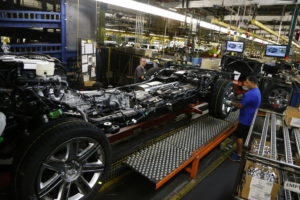
 Sage software is made for small to mid-sized businesses. The company understands the challenges that small manufacturers face and provides state-of-the-art software that grows with your business.
 Sustainable packaging is a buzzword these days for the food manufacturing industry, but it’s not what you think. Yes, care for the environment is important; we have only one planet that we share and if we don’t take care of it, we’ll be out of a place to live. Sustainable packaging is more than a nod to environmentalism. It’s smart business sense—and here’s why.