

Category: Business Growth & Efficiency

Enterprise Software for Better Value, Productivity, and Profitability

Sage X3Yes, Please! With Sage EM (formerly known as Sage X3), It’s Possible
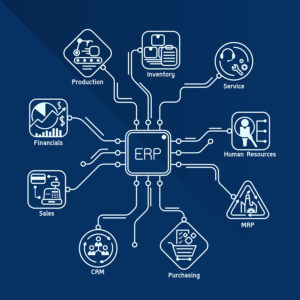
What if we told you that investing in new enterprise software would add value to your company? Boost productivity – and profitability? You’re probably wondering, “Where can I sign up for that?”

It’s as simple as a new ERP system. Sage EM (formerly known as Sage X3) is built for small to medium-sized manufacturing firms. Sage understands the challenges faced by small and growing businesses and has created a robust information system that addresses finance, supply chain, and production needs.

Here’s how Sage EM (formerly known as Sage X3) helps build value, productivity, and profitability in your manufacturing business.

New Enterprise Software Offer Better Value

Older business systems often piece together disparate software packages like a patchwork quilt, stitching them together with custom programming that works – most of the time.

Newer enterprise software such as Sage EM (formerly known as Sage X3) offer comprehensive functions built into the package so that you do not have to fuss with integrations. Not only is finance, supply chain management, and production offered in one software package, but many other needs of a growing manufacturing or distribution business are addressed, too. Human resources, sales, and marketing components may be added to build out your system so that you don’t need custom programming or cumbersome resources to make them all work together.

Newer systems are also designed with the flexibility that manufacturers need. Such systems are cloud-based, delivered over the internet, with data stored and secured on off-premises servers. This negates the need for expensive hardware upgrades and the staff to run and maintain them.

To sum up, the many ways in which newer enterprise software systems offer better value includes:

  • More software capabilities in a single package than previously offered;
  • Flexible internet-based software that runs on almost any connected device;
  • Easier integration with other software for business management needs;
  • Reduced investment in hardware;
  • Lower staffing costs.

These benefits really add up when considering the cost of maintaining the status quo. New systems may lead to better growth and profitability.

The Benefits of an End-to-End ERP Solution

Comprehensive enterprise software solutions such as Sage X3 offer many benefits in addition to the ones listed above. In addition to lowered costs and better capabilities, manufacturers may also benefit by:

  1. Reduced ramp up time and faster time to market.
  2. Increased production at lower costs.
  3. Improved quality control, product traceability, and other QC methods.
  4. Better compliance with inventory management rules.
  5. Improved ability to comply with safety regulations.
  6. Enhanced supply chain management abilities.
  7. Higher customer satisfaction levels.

With such a long list of benefits, it’s time to upgrade to Sage EM (formerly known as Sage X3). Sage understands the needs of manufacturers and has even built special modules for manufacturing niches such as food and drink, pharmaceuticals and cosmetics, and many other areas.

About Sage EM (formerly known as Sage X3)

Sage EM (formerly known as Sage X3) offers a better way to manage your entire business. From financials through the supply chain and production centers, Sage EM (formerly known as Sage X3) offers a rich, integrated functionality that’s tailored to manufacturing.

Sage EM (formerly known as Sage X3) can help you with:

  • Finance: Budgeting, forecasting, fixed asset management and financial reporting are just some of the many areas that Sage EM (formerly known as Sage X3) makes easier and faster.
  • Supply chain management: Keep up with demand and ensure efficiencies through real-time monitoring of purchasing, inventory management, customer services and sales.
  • Production: Shop floor control, BOM planning, quality control and project management are all included in Sage EM (formerly known as Sage X3). No need to purchase separate modules with a comprehensive, end to end ERP solution.

Versatile cloud deployment means that there is no special hardware to purchase. Sage EM (formerly known as Sage X3) runs on any internet connected device including desktop computers, laptops, tablets and more. Real-time data synchronization also means that whether you’re working in Tokyo or Toronto, you’re seeing the same information in the system as your coworkers.

To learn more contact IWI Consulting Group today. We’d be glad to help you with your Sage EM (formerly known as Sage X3) implementation.

IWI Consulting

IWI Consulting Group helps businesses gain insights into their operations, inventory, and profitability. We provide software and support for a wide range of industries throughout the Toronto area. For more information, please visit IWI Consulting Group or contact us today.

Read More

Best Practices for Data Management: Using Sage X3 Efficiently

Double exposure of business woman does data management.Manufacturing is all about efficiencies. The more efficient your operation, the more profitable it can be. To improve efficiencies throughout your company, using a manufacturing ERP software package such as Sage X3 can enhance efficiencies throughout the supply chain, production, finance and more. One way in which you can improve efficiency is by better data management.
There’s an old saying in computers, “Garbage in – garbage out.” It means that the quality of the outputs is only as good as the quality of the inputs into the computer system.

You’ve seen this yourself in the manufacturing process. High-grade raw materials entered into the start of the manufacturing process results in a better product. Better products result in higher customer satisfaction and eventually, high demand as word spreads that your company produces the best quality products in the industry.

Well, the same may be said for data. Your Sage X3 system can yield accurate, insightful reports – or it may yield incorrect data, depending on the inputs.

To ensure you get the most from your manufacturing ERP software, put into place the following best practices for data management. Quality in – quality out in all things, including Sage X3.

Data Management Best Practices

Thanks to the Internet of Things (IoT), many aspects of your manufacturing center now collect data. Workspaces, equipment, even raw materials may be tagged with electronic devices that supply your company with data. This data must be managed correctly in order to produce accurate reports that yield better business insights.
Some data management best practices to put in place include:

  1. Collect only what you use: Just because you can collect large amounts of data doesn’t mean that you should. What will you use? What do you need? These are the questions that should drive the process of choosing data elements to collect. When you determine what information is most helpful to improve business processes, you can review the data elements that are necessary to collect such information. Reports from Sage X3 draw from numerous sources of data, but not every source of data is equally important. To avoid feeling overwhelmed by your data, be selective in what you collect, monitor, and use. More isn’t necessarily better.
  2. Demand real-time data: Sage X3 provides real-time data to help you with business decisions. Other systems may rely on batch uploads, nightly reconciliations, or other methods of managing data that cause delays between what’s occurring and what is reported in the system. Delays can be costly. When real-time data is easily obtained, switching to Sage X3 if you use another system just makes sense.
  3. Use reports to analyze data: It’s tempting to peek at raw data to see general trends, but the robust reporting features of Sage X3 make it a far better tool to understand what’s happening in your business. By using the reports from your system, you’ll be able to see more than macro trends. You’ll be able to drill down into the data to get a better picture of your business and make sound plans for its future.
  4. Build a data dictionary: For information that must be manually entered into the system, it’s important to create a data dictionary. Data dictionaries define the fields in your system so that everyone using the system will use it consistently.
  5. Create data rules: Data rules are also an important best practice when managing data. Data rules define what’s important enough to be entered into the system, as well as how to enter it. Data rules may also spell out who can override data or correct mistakes in the system. By limiting this access to a small group of people, you limit the number of mistakes that can creep into the data.

The world of manufacturing data has come a long way from spreadsheets, tick counts on clipboards, and guesswork. If you’re still on the fence about switching to manufacturing ERP software, we’d like to invite you to explore Sage EM (formerly known as Sage X3).

Finance, supply chain management, and production can all be managed through a single dashboard and real-time data that enhances your understanding of what’s happening in your business and helps you improve decision making.

IWI Consulting Helps Business Be More Efficient

IWI Consulting Group helps businesses gain insights into their operations, inventory, and profitability. We provide software and support for a wide range of industries throughout the Toronto area. For more information, please contact us today.

Read More

CADLink for Sage X3 Improves Efficiency

Sage X3Engineers love accuracy. Their world revolves around it. Tools that provide faster and more accurate data flow from sales to engineering, purchasing, and production such as CADLink for Sage X3 make your engineers’ jobs easier.
CADLink for Sage X3 Links Inventory, Bills, and More

CAD (computer assisted design) helps engineers create designs on the computer that can then be made into prototypes and projects. Typical CAD system require a list of materials entered into the CAD system and then entered into other systems used throughout the company such as inventory management systems and ERP systems. This multiple data entry is time-consuming and increases the chance of data entry mistakes.

With CADLink for Sage X3, engineers are able to build out the specs for your projects while they simultaneously create item lists, including a list of supplies. They enter one set of materials for the project into one system, eliminating duplicate entry and the potential for mistakes inherent in any duplicate system.

With CADLink for Sage X3, you can:

  • Design new products and create the bill of materials (BOM) in one system.
  • Earmark materials in the warehouse now for design projects currently on the drafting table.
  • Enter one set of materials into the system and have the information sent automatically to multiple systems, reducing data entry and mistakes.
  • Conduct live searches in Sage EM (formerly known as Sage X3) Items Master List and insert raw materials and non-CAD items into your BOM.
  • Write back your CAD model properties so that CAD engineering data remains in sync with Sage X3 data.

The Many Benefits of CADLink for Sage X3

Engineers just want to focus on engineering—they don’t want to waste time typing material lists into multiple systems, fussing with invoices, or adjusting entries to ensure that changes are made throughout the system when a design is tweaked.

That’s why CADLink for Sage X3 pleases even the pickiest engineer. The system takes care of sending changes out through the entire Sage X3 system. One small engineering change that updates the BOM won’t be forgotten, leading to multiple mistakes. Instead, a change recorded in one part of the system flows throughout the entire system. It increases accuracy, which in turn improves efficiency and profitability. The more accurate your orders are, the better the service to your customers. This cycle of improved efficiency can be felt throughout the organization from the warehouse to the client, from sales to finance, helping everyone in your company succeed.

Sage X3: ERP for a New Era

Sage X3 is a powerful ERP, or enterprise resource planning, software tool. ERP programs help businesses centralize their data so that all information is available for access, collaboration, and sharing across teams.

Sage X3 puts powerful knowledge right at your fingertips. Mobile access means you can access your business data whenever you want to, wherever you want to. Check on inventory, open invoices, shipping updates, and more on the go.

Tools like Sage X3 help everyone in your business improve productivity. Errors are reduced, and collaboration among teams and employees is easier. When all systems improve, customer satisfaction increases. It’s a winning combination for all.

IWI Consulting Group

IWI Consulting Group offers businesses assistance choosing the right Sage products for their needs and making the switch to a new Sage process. We can help you convert your company’s systems into a single, integrated solution that supports your business and enhances productivity. We offer CADLink for Sage X3, Sage 300cloud (formerly known as Sage 300), and many other Sage productivity tools to help your business thrive.

Contact us today for a consultation.

Read More

Manufacturing ERP Makes Multi-Location Operations More Efficient

Managing multiple locations presents unique challenges. Many manufacturing organizations have factories, warehouses, and offices located in different parts of the country to better serve their customers. The faster and easier it is to share information among these different facilities, the better.

A whitepaper from the Aberdeen Group, available from IWI Consulting, shares insights into how manufacturing ERP systems can help multi-location operations. The study examined data from 81 participants to find out what Leaders did to improve their companies. They found that the main benefits derived from ERP systems included enhanced access to data from all points of a company, increased efficiencies, better planning, and reduced costs.

Benefits of a Manufacturing ERP System

Enhanced Information Sharing

One of the biggest challenges that companies with multiple locations face is sharing data from one part of the company with another. Even when all portions of the company want to share, it’s often hard to figure out the best way to do so. Emailing information makes sense, and it’s fast, but it’s also inevitable that someone is going to be left off of the email chain who needs the information. Shared networks are great, but you have to know where to look for the information in order to find it.

The solution is simple: an ERP system. With an ERP system, all of company’s information flows easily and seamlessly into one system. It’s accessed via the internet, so anyone with an internet connection and a company account can query the system and receive data. It makes sharing information much easier across the company.

Greater Operational Efficiencies

Another benefit for businesses operating multiple locations is the ability to increase and enhance operational efficiencies. With an ERP system, you can see all points of the supply chain. Automated equipment notifications can help you flag idle machinery and move production to other locations. You can then use all resources efficiently to maximize production and profits.

Better Customer Service

ERP systems also enhance customer service for multiple-location businesses. In the past, if a customer called one location, he may have received only a partial answer because information from other locations was lacking. Phone calls had to be made to find parts or portions of an order to provide a status update.

With an manufacturing ERP system in place, you can query a database and receive real-time updates on order status. Supply chain visibility makes it easy to see where everything is in the process and provide customers with an answer to their inquiries. This faster response may mean the difference between keeping and losing a customer.

Scalability

Lastly, manufacturing ERP systems are highly scalable, so as your company expands to new locations, the data can keep flowing. You don’t have to worry about adding new networks, systems, or updates. Cloud-based ERP solutions scale easily to accommodate new locations.

Making Your Work Easier

Manufacturing ERP systems make multi-location operations so much easier. Improved visibility, enhanced efficiencies—the list goes on and on. If you manage multiple locations, factories, or warehouses, having easy access to data can have a huge impact on your company’s future.

IWI Consulting provides you with expert insights and resources such as the whitepaper from Aberdeen Group so that you can enhance your business decision-making capabilities.

IWI Consulting Group helps Canadian businesses and nonprofits find ERP solutions to fit their needs. We work with you to find the best data solutions for your company that can help boost productivity and profitability. Learn more on our website or call us at 1-866-916-3851

Read More

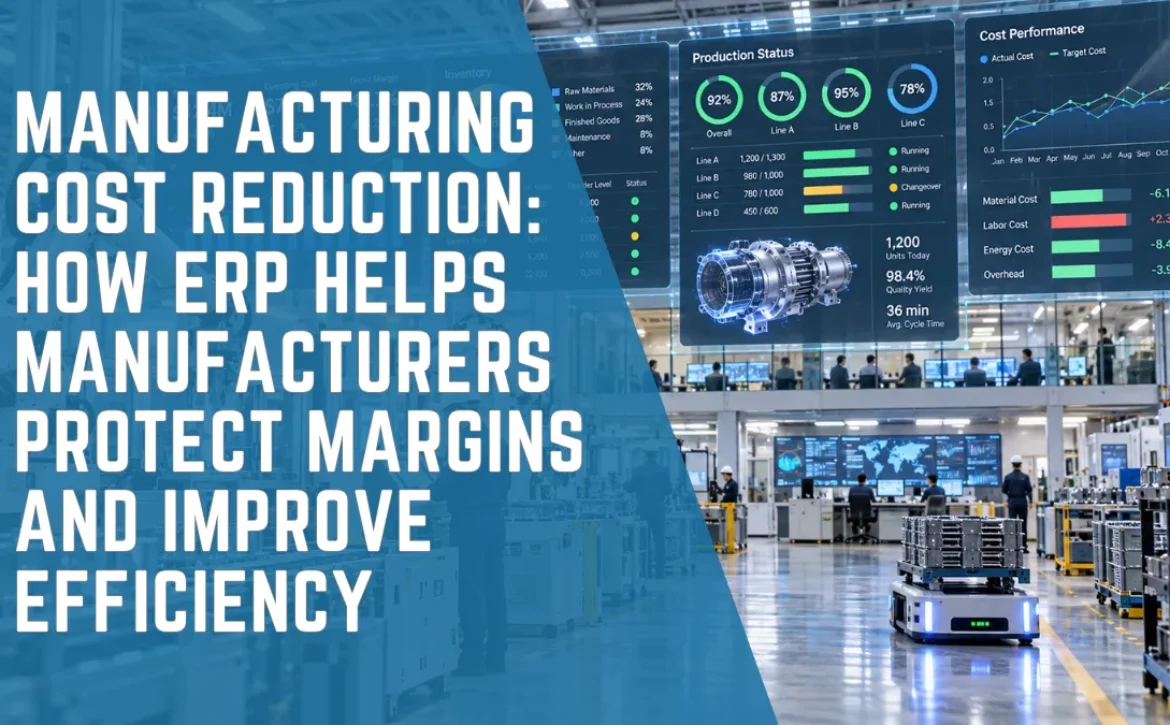
Manufacturing Cost Reduction: 12 Strategies to Improve Efficiency and Profitability

Manufacturing Cost Reduction: 12 Strategies to Improve Efficiency and Profitability

Discover practical ways to reduce production costs, minimize material waste, improve inventory management, and protect profit margins. Explore 12 actionable manufacturing cost reduction strategies and learn how connected operational and financial data can support smarter decisions.
Photo by Trans Russia on Unsplash

Why Manufacturing Cost Reduction Matters

Manufacturing costs affect more than profitability. They influence pricing flexibility, production efficiency, working capital, and a company’s ability to respond to changing market demands.

Rising material prices, inefficient production schedules, excessive inventory, equipment downtime, and quality issues can increase operating expenses without creating additional value.

For manufacturers, the goal is not simply to spend less. It is to eliminate avoidable costs while protecting product quality, production capacity, and customer commitments.

Effective manufacturing cost reduction requires finance and operations teams to understand where expenses originate, identify their underlying causes, and prioritize improvements that deliver measurable results.

Understanding the Biggest Manufacturing Cost Drivers

OPERATIONAL EFFICIENCY

Manufacturing Cost Drivers

Understanding where manufacturing costs originate is the first step toward improving operational efficiency and protecting profit margins. Raw materials, labor, equipment, inventory, and production waste all influence the total cost of manufacturing.

But how much could targeted improvements actually save your business?

Use the Manufacturing Cost Reduction Calculator below to estimate potential annual savings from reducing material expenses and production scrap. Adjust the values to explore different scenarios and understand how even modest improvements can affect your bottom line.

Manufacturing Cost Reduction Calculator

Estimated Annual Cost Savings: $55,000 CAD

Results are illustrative, assume no overlapping costs, and do not represent guaranteed savings.

Raw Materials

Volatile commodity pricing, primary extraction yields, and global procurement strategies directly impact baseline unit cost.

Direct Labor

Hands-on assembly wages, specialized training curves, shifts, and direct operator touch-time optimization parameters.

Machine Costs

Capital equipment depreciation, tooling wear cycles, preventative maintenance, and utility power footprints.

Inventory

Identifies materials or finished goods that are no longer usable or commercially relevant. Early identification helps reduce storage expenses and potential write-offs.

Quality Control

Defect detection, inline tolerance auditing, rework labor loops, and material scrap rates on the line.

Production Overhead

Indirect factory floor salaries, safety compliance standards, equipment lease structures, and facility rentals.

Supply Chain

Inbound transport logistics, ocean/air freight, custom brokerage tariffs, and hub distribution dynamics.

Administration

Licensing fees for enterprise ERP networks, operational audits, legal governance, and physical plant management.

Material & Inventory Cost Reduction

Material purchasing, inventory management, and production waste have a direct impact on manufacturing costs, working capital, and operational efficiency. Reducing these costs requires more than negotiating lower supplier prices. Manufacturers also need to control material consumption, improve inventory accuracy, and identify unnecessary waste throughout production. The following three strategies help manufacturers improve material cost visibility, strengthen inventory management, and reduce avoidable production losses.

01. Control Raw Material Costs

Raw materials are often a major component of manufacturing costs. However, purchasing at the lowest unit price does not always result in the lowest total cost. Unreliable deliveries, excessive freight charges, quality issues, and inefficient material consumption can reduce expected savings and disrupt production. Manufacturers should evaluate purchasing decisions based on total acquisition cost, supplier performance, and material efficiency rather than price alone.

Practical Actions

Key KPIs

Purchase Price Variance, Material Cost per Unit, Supplier On-Time Delivery.

ERP Connection

Sage X3 purchasing, inventory, and financial capabilities can support supplier comparisons, purchasing cost analysis, and material cost visibility. By connecting procurement and inventory information, manufacturers can better understand purchasing decisions and their impact on production costs.

02. Improve Inventory Management

Excess inventory ties up working capital, increases storage expenses, and raises the risk of obsolescence. Insufficient inventory, however, can interrupt production, increase procurement urgency, and generate additional freight and operating costs. Effective inventory cost reduction requires balancing demand, supplier lead times, production requirements, and inventory availability.

Practical Actions

Key KPIs

Inventory Turnover, Days Inventory Outstanding, Inventory Carrying Cost.

ERP Connection

Sage X3 can connect purchasing, inventory, and manufacturing information to support material planning and stock visibility. With appropriate inventory management processes and configuration, manufacturers can improve replenishment decisions, reduce unnecessary inventory, and maintain better control over material availability.

03. Reduce Material Waste and Scrap

Material waste, inefficient consumption, and production scrap can significantly increase manufacturing costs. Losses may result from inaccurate material planning, poor handling practices, production defects, inefficient cutting or processing, and differences between expected and actual material consumption. Reducing these losses requires better visibility into production yields, material usage, and recurring sources of waste.

Practical Actions

Key KPIs

Scrap Rate, Material Yield, Material Usage Variance.

ERP Connection

Sage X3 can connect production orders, inventory movements, material consumption, and financial information to support material usage analysis and manufacturing cost visibility. With appropriate production reporting, manufacturers can better investigate scrap, consumption variances, and avoidable material losses.

Production & Quality Optimization

Production inefficiencies, equipment downtime, and quality failures can increase manufacturing costs without creating additional value. Improving production planning, resource utilization, and quality management helps manufacturers reduce avoidable expenses, maintain reliable output, and protect product quality. The following strategies focus on improving production efficiency while reducing downtime, rework, and operational waste.

04. Improve Production Planning and Scheduling

Inefficient production planning can lead to excessive changeovers, material shortages, longer lead times, and increased work-in-progress inventory. When production schedules are disconnected from material availability, machine capacity, and customer demand, manufacturers may experience avoidable downtime and higher operating costs. Improving scheduling accuracy helps organizations coordinate production resources, reduce unnecessary interruptions, and maintain more predictable manufacturing operations.

Practical Actions

Key KPIs

ERP Connection
Sage X3 production management and material planning capabilities can help manufacturers coordinate production orders, bills of materials, inventory requirements, and available resources. Connected production and inventory information supports more informed scheduling decisions and helps organizations identify planning inefficiencies.

05. Improve Labor and Machine Utilization

Manufacturing costs increase when employees and equipment spend excessive time waiting for materials, completing unnecessary setup activities, or responding to unplanned production interruptions. Improving utilization does not necessarily mean increasing production speed or reducing headcount. The objective is to use available labor and equipment more effectively while maintaining safety, quality, and operational reliability. Better visibility into capacity and downtime helps manufacturers identify opportunities to improve throughput without unnecessary capital investment.

Practical Actions

Key KPIs

ERP Connection
Sage X3 can support production order management, work-center information, resource planning, and production activity reporting. With appropriate shop-floor data collection processes and integrations, manufacturers can improve visibility into labor utilization, machine performance, and production efficiency.

06. Reduce Rework and Quality-Related Costs

Product defects, production scrap, and repeated manufacturing activities can increase material consumption, labor costs, and equipment utilization. Quality problems may also generate additional expenses through inspection, rejected materials, delayed deliveries, and customer returns. Improving quality management helps manufacturers identify recurring defects, address their underlying causes, and reduce unnecessary production expenses.

Practical Actions

Key KPIs

ERP Connection

Sage X3 quality management and traceability capabilities can support inspection processes, quality-related inventory controls, and visibility into manufacturing exceptions. Connecting quality information with production and inventory data can help manufacturers investigate recurring defects and understand their financial impact.

Manufacturing Cost Visibility & Control

Understanding manufacturing costs requires more than reviewing financial reports. Manufacturers need visibility into production activities, material consumption, operational performance, and cost variances to identify where inefficiencies affect profitability. Connected operational and financial information helps organizations investigate cost drivers, improve decision-making, and prioritize improvements that deliver measurable results.

07. Improve Manufacturing Cost Visibility

Effective manufacturing cost reduction requires accurate information about what products actually cost to produce. Differences in material consumption, labor hours, machine time, scrap, and production overhead can significantly affect profitability. When financial and operational information is disconnected, manufacturers may identify unfavorable cost variances without understanding their underlying causes.

Practical Actions

KEY KPIS

Actual Cost per Unit, Production Cost Variance, Material Cost Variance.

ERP CONNECTION

Sage X3 can connect production, purchasing, inventory, and financial information to support product costing, manufacturing cost analysis, and investigation of production variances.

08. Improve Shop-Floor Visibility

Limited visibility into shop-floor activities can make it difficult to identify production delays, equipment downtime, material shortages, and operational bottlenecks. Improving production visibility helps manufacturers compare planned and actual performance, identify inefficiencies, and make more informed operational decisions.

Practical Actions

KEY KPIS

Production Throughput, Equipment Downtime, Schedule Adherence.

ERP CONNECTION

Sage X3 production management capabilities, supported by appropriately configured shop-floor processes and integrations, can improve production reporting and operational visibility.

09. Strengthen Manufacturing Cost Variance Analysis

Unexpected increases in manufacturing costs may originate from supplier price changes, excessive material consumption, production inefficiencies, or inaccurate costing assumptions. Analyzing these differences helps manufacturers understand where costs are increasing and prioritize improvements based on financial impact.

Practical Actions

KEY KPIS

Material Price Variance, Material Usage Variance, Production Cost Variance.

ERP CONNECTION

Sage X3 can support manufacturing costing and financial analysis, helping finance and operations teams investigate differences between expected and actual production costs.

Operational Optimization

Sustainable manufacturing cost reduction requires continuous improvements across procurement, profitability analysis, and administrative workflows. By strengthening supplier performance, understanding product-level profitability, and reducing manual processes, manufacturers can improve operational efficiency while maintaining stronger financial control.

10. Improve Supplier & Procurement Management

Effective procurement management requires manufacturers to balance supplier pricing, delivery reliability, lead times, material quality, and total purchasing costs.

Practical Actions

Key KPIs
Purchase Price Variance, Supplier On-Time Delivery, Supplier Defect Rate, Procurement Cost per Unit.
ERP Connection

Sage X3 can connect purchasing, inventory, supplier information, and manufacturing requirements to streamline the procurement cycle and ensure optimal inventory levels.

11. Improve Product & Customer Profitability Analysis

Revenue growth does not always translate into stronger manufacturing profitability. Understanding margins at granular product levels is critical.

Practical Actions

Key KPIs
Gross Margin by Product, Contribution Margin, Manufacturing Cost per Unit, Customer Profitability.
ERP Connection

Sage X3 can connect manufacturing costing, inventory, sales, and financial information, providing real-time data to analyze product margins and cost variances.

12. Automate Manual Manufacturing Processes

Manual data entry, disconnected spreadsheets, repetitive approvals, and fragmented operational workflows can increase administrative costs and slow production timelines.

Practical Actions

Key KPIs
Manual Processing Time, Data Entry Error Rate, Process Cycle Time, Administrative Cost per Transaction.
ERP Connection

Sage X3 supports integrated business processes across manufacturing, purchasing, inventory, sales, and finance to reduce duplicate data entry and streamline automated workflows.

Identify Opportunities to Reduce Manufacturing Costs

Discover how better production visibility, inventory management, and ERP integration can support your cost reduction goals.
OPERATIONAL INTELLIGENCE / PERSPECTIVE

Efficiency & Cost Scorecard

An editorial evaluation of core manufacturing margins, raw material utilization, and secondary capacity indices. Updated daily.
COST PER UNIT

$4.12

Decreased by 8.4% this quarter, outpacing original procurement estimates.
MATERIAL COST VARIANCE

-$14.2k

Highly favorable variance reflecting stabilized raw steel and composite pricing.
SCRAP RATE

2.42%

Well below the 3.0% maximum threshold following tooling updates in June.

Methodology & Utilization

A detailed look into the secondary performance metrics, calculations, and active operational formulas that define production flow and inventory efficiency.

First-Pass Yield (FPY) / 96.4%

Formula: (Good Units Completed / Total Units Entered) • Demonstrates high line precision with minimal initial defect rework required.

Inventory Turnover / 14.2x

Formula: Cost of Goods Sold / Average Inventory • Higher ratio denotes excellent liquidity and minimal capital locked in warehouse storage.

Capacity Utilization / 88.1%

Formula: (Actual Output / Potential Output) × 100 • Operating at peak efficiency margins without inducing tooling stress or scheduling overtime.
METHODOLOGY

The Implementation Roadmap

A structured, six-step deployment lifecycle designed to eliminate operational silos, secure database integrity, and drive sustainable financial optimization.
1

Establish a Cost Baseline

Begin by auditing historical expenditure records. Create an immutable financial reference point to measure future performance, instantly identifying immediate spend anomalies and quick-win containment targets.
2

Identify Major Cost Drivers

Isolate high-impact operational variables. Map overhead, machinery runtimes, procurement patterns, and labor inputs to determine exactly which dependencies direct bottom-line performance.
3

Connect Operational & Financial Data

Dismantle legacy data silos. Unify ERP activity logs, warehouse management metrics, and general ledger accounts to cultivate a real-time, singular database of strategic truth.
4

Improve Data Accuracy

Establish strict validation boundaries. Eliminate human-error overhead with systemic validation controls, clean up historic inconsistencies, and guarantee continuous data integrity.
5

Standardize & Automate Workflows

Define unified operational standard operating procedures. Codify approved practices into system-driven automated triggers to optimize throughput, compress cycle times, and unlock scaling capacity.
6

Monitor & Continuously Improve

Close the operational optimization loop. Deploy executive reporting dashboards and automated threshold triggers, empowering your core team to systematically identify and execute margin improvements.
OPERATIONAL INTERCONNECTIVITY

How Connected ERP Data Supports Manufacturing Cost Reduction

Manufacturing costs are influenced by decisions across purchasing, inventory, production, quality, and finance. When these functions operate through disconnected systems, manufacturers may struggle to identify the operational causes behind increasing costs.

An integrated ERP environment can connect these activities, providing more consistent information for cost analysis, production planning, inventory management, and financial reporting.

Where Manufacturing Cost Reduction Opportunities Emerge

Material Cost Variance

Compare actual and expected material costs.

Inventory Carrying Cost

Monitor expenses associated with holding inventory.

Production Cost per Unit

Track the cost of producing each finished unit.

From Operational Data to Better Cost Decisions

An unexpected increase in material costs may originate from supplier pricing, excessive consumption, production scrap, or inaccurate inventory records.

When purchasing, inventory, production, and financial information are connected, finance and operations teams can investigate these causes more effectively and prioritize corrective actions.

The objective is not simply to collect more data. It is to turn operational information into measurable manufacturing cost reduction opportunities.

How Sage X3 Supports Manufacturing Cost Reduction

Reducing manufacturing costs requires more than identifying operational inefficiencies. Manufacturers also need reliable information, coordinated processes, and the ability to measure whether improvements are delivering results. When production, inventory, purchasing, and financial information are managed across disconnected systems, identifying the underlying causes of manufacturing costs becomes more difficult. Sage X3 helps manufacturers connect these business functions within an integrated ERP environment, supporting more accurate cost analysis, improved production planning, stronger inventory management, and better financial visibility. For organizations managing complex manufacturing operations, this integration can provide a stronger foundation for continuous cost improvement.

Production Management

Sage X3 supports production planning, bills of materials, work orders, and manufacturing operations, helping teams coordinate resources and improve production visibility.
Benefit: Better production planning and more consistent operational execution.

Inventory & Procurement

Connect purchasing, inventory, and manufacturing requirements to support more informed replenishment decisions, material availability, and supplier management.
Benefit: Improved material control and reduced risk of unnecessary inventory.

Manufacturing Cost Visibility

Connect manufacturing transactions with financial information to support product costing, cost variance analysis, and more informed operational decisions.
Benefit: Greater visibility into the factors affecting manufacturing margins.

Financial & Multi-Site

Support financial reporting, organizational complexity, and visibility across multiple sites, entities, and manufacturing operations.
Benefit: More consistent financial oversight across complex operations.

When Should Manufacturers Consider Sage X3?

Not every manufacturer needs to replace its existing ERP system. However, increasing operational complexity can make it more difficult to maintain reliable costing, coordinate production, and manage inventory across disconnected systems.
These challenges do not automatically justify an ERP replacement. A structured assessment can help determine whether process optimization, improved integrations, or a more comprehensive ERP solution offers the stronger business case.

Manufacturing ERP Expertise from IWI Consulting Group

With more than 25 years of ERP consulting experience, IWI Consulting Group helps organizations across Canada and the United States evaluate, implement, optimize, and support ERP solutions. Our approach begins with understanding business requirements, manufacturing processes, reporting challenges, and operational priorities before recommending technology. For manufacturers evaluating Sage X3, IWI helps align ERP capabilities with measurable business objectives, including production efficiency, inventory management, financial visibility, and manufacturing cost reduction.
25+

Years

ERP consulting and implementation experience

500+

Organizations

Supported across industries

Canada & US

Coverage

ERP consulting, implementation, and support

Whether the priority is reducing material waste, improving production planning, strengthening cost visibility, or evaluating an ERP replacement, the first step is understanding where operational challenges are affecting financial performance.
EFFICIENCY & CONTROL

Sage X3 & Manufacturing Cost Reduction FAQ

Explore how modern manufacturers leverage Sage X3 ERP to identify cost variances, minimize waste, and streamline production workflows.

How does Sage X3 target and reduce manufacturing overhead?

Sage X3 targets overhead by providing granular, real-time tracking of shop floor labor, machine work centers, and material usage. By identifying bottlenecks and scrap patterns instantly, production managers can adjust schedules on the fly, eliminating costly idle time and minimizing material waste.
Absolutely. The platform features robust multi-level Bill of Materials (BOM) routing and detailed cost roll-ups. By comparing expected versus actual production costs, you can quickly isolate high-cost variance components, optimize supplier sourcing, and reformulate BOMs for maximum profitability.
Predictive maintenance in Sage X3 links machine-level IoT sensor alerts directly to your maintenance scheduling system. This proactive approach triggers service work orders before breakdowns occur, dramatically reducing catastrophic machinery downtime, emergency repair costs, and lost production capacity.
Sage X3 automates the entire procurement workflow, integrating purchase requisitions with vendor performance analysis. By tracking price history, volume tiers, and delivery reliability, purchasing teams can confidently negotiate better contracts and eliminate high-cost spot buys.

Build a Smarter Manufacturing Cost Reduction Strategy

IWI Consulting Group helps manufacturers evaluate processes, identify ERP limitations, and implement solutions aligned with measurable operational and financial objectives.
Read More

Increased Productivity Just One ROI Benefit from ERP Systems

Increased productivity is just one of the many benefits derived from ERP systems, according to a new white paper. The paper, entitled Conducting a Cost-Benefit Analysis for ERP, outlines numerous benefits to companies who implement enterprise systems.

Building the Economic Case for ERP Systems

If you plan to propose an ERP system for your company, it’s important to build a solid economic case for its implementation. Conducting a cost-benefit analysis can help you easily articulate the financial benefits to your company in return for their investment.

The first step in the process is to gather the costs of implementation. Obvious costs include acquiring the system, customizing it, testing it, training the staff to use it and upgrading it as necessary. Cost should be calculated on a monthly, quarterly and annual basis for comparison.

Next, assess the economic returns. The paper suggests that the returns on investment include:

  1. Streamlined procedures
  2. Greater intelligence
  3. Increased productivity
  4. Greater reliability
  5. Improved reporting

One way to build your case is to focus on any one of these issues that may be exceptionally germane to your company. For example, if your current system lacks a robust business intelligence reporting system, emphasizing the benefits to your company of greater intelligence may help you build the best economic case for implementing new enterprise systems.

Increased Productivity Improves ROI

Let’s take a look at one of the five returns: increased productivity. Enterprise systems such as Sage EM (formerly known as Sage X3) and Sage 300cloud (formerly known as Sage 300) can help you enhance productivity in many ways:

  • Reduce time-consuming manual tasks by automating the most common ones.
  • Use automated workflows to accelerate business tasks.
  • Provide employees with information to solve customer problems and answer questions proactively.
  • Track data for compliance and risk management.

All of these factor into increased productivity. Automated workflow management tracking compliance issues and easily accessed customer data helps employees work faster and smarter, not harder.

Costs Down, ROI Up

How long does it take your employees now to find crucial information? Do they have to access several systems, or spend time calling employees in different offices who have access to those systems?

Think about how that sounds from your customer’s perspective. While they’re on hold waiting for your employees to get back to them, they’re wondering why the “computer” doesn’t just give the employee the information she needs. Mentally, they are comparing their experience with your company with their experiences in the past with other, similar companies. If your company is found lacking, they may just take their business elsewhere.

Is It Time for a Change? Sage EM (formerly known as Sage X3)

Increased productivity also means breaking down silos and improving access to information companywide. That’s where Sage EM (formerly known as Sage X3) can help.

Through improved transparency, business data becomes available to all employees. Every part of your organization can become more productive when they have the right tools. With Sage EM (formerly known as Sage X3), you can empower your employees to work smarter, not harder, and improve productivity.

It’s a smarter way of doing business.

Contact US

We’d like to invite you to see for yourself how a cost-benefit analysis can help you build a case for an ERP system for your company. Whether you choose Sage EM (formerly known as Sage X3), Sage 300cloud (formerly known as Sage 300), or Sage BusinessVision to provide accurate, timely data, the more information you have, the more opportunities you’ll find to increase sales, improve customer satisfaction, and reduce costs. And all of that translates into improved ROI.

For more information on ERP consulting and the many other business solutions, please contact IWI. We understand business systems and how they can impact productivity. Call us at 1-866-916-3851.


Read More

Enterprise Software, Customer Satisfaction, and Improved ROI

The Link Between Streamlined Procedures and Profits

It may sound strange to link enterprise software with customer satisfaction, but the two are actually closely linked. Enterprise software can reduce errors, shorten the time it takes to discover mistakes, and help team members respond quickly to problems. The results can be improved customer satisfaction, an important part of any business.

Happy customers are return customers, and repeat business is the engine that drives profitability. The more you can reduce turnover or churn, the better. Acquisition costs can skyrocket if your churn rate soars. The more you can streamline procedures, the better you can reduce turnover and improve your company’s ROI.

Enterprise software can help by streamlining procedures and improving customer satisfaction.

Faster Response Time with Enterprise Software

Many companies suffer from slow response time. Your sales team will tell you that slow response to customer inquiries or complaints can seriously impact renewals and continued business. To remain competitive, you must meet or exceed customer expectations. That includes exceeding expectations for response time.

Enterprise software such as Sage EM (formerly known as Sage X3) or Sage 300cloud (formerly known as Sage 300) can help. Formalized processes, procedures and tasks make it easier for your teams to respond quickly and efficiently to every contact. Secure, real-time connection enables your entire team to access important customer data and respond quickly no matter where they are.

Reducing Mistakes

It’s not just slow response times that frustrate customers. Customers are also frustrated by mistakes, especially easily avoided mistakes. When you streamline procedures using enterprise software, you tighten up steps in the process that can lead to costly mistakes.

Although mistakes are inevitable, too many mistakes, or mistakes that go on too long without correction, can lead to high customer turnover rates. Dissatisfied customers also tell other customers, which may increase your company’s overall churn. That raises the cost of customer acquisition and decreases your overall ROI. Reducing mistakes and retaining customers improves ROI.

Where do mistakes in your business occur? They can occur in any department from manufacturing to accounting. A good ERP system, such as Sage EM (formerly known as Sage X3) or Sage 300cloud (formerly known as Sage 300), can help you pinpoint those mistakes by providing accurate, timely and actionable data. The more you have accurate data at your fingertips, the more you’ll be empowered to make positive changes that correct and prevent mistakes.

Customers don’t expect your company to be perfect. They do, however, expect you to correct mistakes quickly, apologize, and rectify the situation. With better data management, improved and streamlined procedures and integrated systems, you’re well on your way to preventing or fixing mistakes.

ERP Consulting and Improved ROI

Faster response time improves customer satisfaction, which in turn improves retention. It’s an old saying that it costs more to acquire new customers than it does to serve existing customers. With this in mind, think about how faster response times, accurate data, and better processes can reduce customer turnover.

One way to assess the ROI of reduced turnover or customer churn is to work with your sales, marketing, and finance teams to determine the acquisition costs of new customers and the customer lifetime value. Determining how much each customer is worth, then comparing it to the investment in ERP consulting and ERP systems, may convince you that both can improve your company’s ROI and overall profitability.

Find Out for Yourself: Get the White Paper

A new white paper called Conducting a Cost-Benefit Analysis for ERP provides many examples of how enterprise software may benefit your business. Streamlined procedures and improved customer satisfaction are just some examples of the many positive benefits of ERP consulting, ERP software, and systems such as Sage EM (formerly known as Sage X3) and Sage 300cloud (formerly known as Sage 300).

Sage enterprise software from IWI Consulting Group are robust and comprehensive business tools that can improve productivity throughout your business. Knowledge is power, and when you have accurate business knowledge, you can better control costs, inventory and more. This scalable solution grows with your business too, making it extremely cost effective over time.

IWI Consulting Group offers ERP consulting, enterprise software and more to help you improve your business systems. Contact us today for more information: 1-866-916-3851.

Read More

The Importance of Teamwork in Business Systems

Have your business systems been pieced together over time? Do you have a patchwork of software at different levels of technological maturity? Are you having interfacing and maintenance issues? If your software systems are not communicating, it may be time to switch to an integrated enterprise resource planning (ERP) system.

Just like team sports, your business systems need to work together in order for your company to meet its goals. Many players working together can achieve much more than one player who is acting alone. While different business functions require tools that meet their specific needs, a problem occurs when the functional software is so isolated that it can’t work with any other system. They contribute to functional silos.

It’s a common problem that high-growth businesses share. As you add new offices, sales channels, products, and processes, you may have implemented short-term solutions to meet revenue goals. As a result, software applications were installed at different times and in different areas resulting in business process inefficiencies, software incompatibility, data loss, human error, complexity, and higher costs. When you have functional silos, challenges arise that can impede growth. Perhaps your company is already in this place. Or perhaps, you are headed down this path. In either case, it is important to begin to consider systems that will help you meet your long term corporate goals and that will enable growth and efficiency.

Teamwork is vital to achieving corporate goals. We require our employees to be team players; shouldn’t we require that of our software as well? Non-team players can be selfish, uncommunicative, and hard to work with. Unfortunately, this the case with much of our business software.

Many of the same qualities that define a good team player are qualities that you should look for in your business systems as well:

Effective Communication: A team player communicates well with other team members. Software that communicates effectively will easily integrate and talk to each other.

Sharing Information: Team players share information, knowledge, and experience that help the entire team. One of the most important benefits of “team playing” software is that data are shared among functions and processes without multiple data entry. This can be achieved through integrated enterprise resource planning solutions like Sage EM (formerly known as Sage X3) or Sage 300cloud (formerly known as Sage 300).

Cooperation: Team players work with others and act together to accomplish a job. In the same way, business software needs to work across functions to achieve corporate goals.

Flexibility: Your team needs to deal with changing conditions and change course when situations change. Your business software needs to be flexible enough to incorporate future needs, growth and technology.

Active Participation: We want our employees to be proactive and identify problems. Good business software will run processes and indicate problems as they occur through alerts and dashboards.

Problem Solving: Team players identify problems and then collaborate with others to find a solution. An integrated ERP enables problems to be resolved across all functions.

Reliability: Team players show up and do the work they were hired to do. In the same way, your software systems need to work effectively and reliably.

Playing on a team requires collaboration; everyone needs to be striving for the same goal. The term, “collaboration,” has been overused. In the software technology world, it is often only used to define social media and conversation. But just talking about a problem won’t get you to the goal. You need to be able to share real data and processes. Your business systems need to enable cross-functional collaboration to meet company objectives for financial and market growth.

A big group of people using the same software doesn’t translate into collaboration. Cross-functional collaboration requires changing the culture, and often, your technology. Stand-alone software systems impose informational and operational silos. Departments cannot be integrated unless your business software talks to each other. Installing the most comprehensive system in each area that doesn’t communicate isn’t much better than no system at all. This means that sales, marketing, finance, operations, and service software should all be integrated, sharing the same database in real time. When all functions input data and have access to enterprise-wide systems, everyone can work together as a team. An integrated system gives the customer a better experience in addition to improving efficiency, productivity, and profitability.

Contact us to learn more about our integrated ERP software, including Sage 300cloud (formerly known as Sage 300) and Sage X3 (formerly known as Sage X3), which will help your entire business work better as a team.

Read More

Using Enterprise Software to Achieve a Competitive Advantage

In the past few weeks, we’ve discussed the need to establish transparency in the food manufacturing business. While implementing the technology needed to achieve transparency may require investment, there is also a significant marketing advantage that can improve your return on investment; enterprise software.

Consumers are increasingly putting great importance on the origin of their food as well as the methods used to grow and process it. They are motivated by health, safety, and environmental concerns and expect to receive information about food including contents and production practices. As a result, the food processing industry is under increased public scrutiny resulting in a need to provide transparency, traceability, and food safety.

How can food manufacturing transparency provide a competitive advantage?

Whether you sell directly to the consumer or to distributors, transparency can grow your revenue and enterprise software is necessary to provide this transparency. Putting a marketing focus on transparency will let customers know that you are dedicated to transparency in your operations and processes, providing you with a major competitive advantage over companies who only do the minimum required.

Transparency indicates accountability. Customers want their food manufacturer to take accountability for their product rather than hiding problems when they occur. Being transparent puts a “face” on your business rather than an operational “black hole”. Transparency nurtures a certain level of responsibility on the part of the company and gives customers a better idea of where their money is going.

Transparency builds trust. Transparency can help build trust in your brand, making you stand out from the competition and increasing customer loyalty. Because consumers are a large driver of the need for transparency in food manufacturing, companies that deliver on transparency may increase customer perceptions of their product, improving brand equity and product revenue.

Transparency increases customer engagement. Customers typically consider many factors before selecting your product. Some of those are obvious—price, quality, service—while others are less tangible—perceived value and trust in a particular brand. While it may be easy for a competitor to match your price, once you have established trust with your customer or consumer, you will have a significant advantage. Customers will come back again and again because they know what to expect from you.

Transparency reduces the effects of unforeseen problems. When you are using your operational data wisely, you mitigate brand-damaging problems like recalls as you avoid spoilage and eliminate cross-contamination of allergens or contaminants.

Transparency increases your customer focus. When you share data with your customers, you are improving your ability to meet their needs. By extending metrics programs and performance reviews to your distributors, you are forced to be more focused on your customer. Having a customer focus can improve your operations and increase sales.

Are there any risks to transparency?

When you implement transparency using enterprise software, your operations information is more easily available to everyone; not just your customers. Your competitors may try to copy you, but without a dedication to transparency, they cannot be as successful. Also, once you have established trust with your customer, they are more likely to remain loyal to your brand.

Having transparent operations means that you will be under more scrutiny by consumers. This means that it is important that your operations are safe and reliable. In fact, you shouldn’t tout your transparency when it is more important to make your product better first.

Enterprise software improves transparency to the customer

Enterprise software like Sage EM (formerly known as Sage X3) is necessary to implement a transparency program. Sage EM (formerly known as Sage X3) can help you be more transparent with your customers by allowing you to:

  • Track properties and nutritional content by product
  • Include formulas or recipes in quotes to customers
  • Manage samples for prospects and customers
  • Create Certificates of Analysis by lot and send them with the shipment or sample
  • Track lots across the product lifecycle—all the way through sales.
  • Use business intelligence to better predict demand
  • Be better prepared for a recall
  • Get real-time visibility of consumer preferences
  • Customize your product to meet the unique needs of your distributors

IWI Consulting Group can help you implement transparency in your food manufacturing business with our enterprise software, Sage EM (formerly known as Sage X3). Contact us to get started.

Read More

Measuring Your Success with Enterprise Software

Companies need to constantly measure key performance indicators (KPIs) to ensure that they are achieving their operational and financial goals. Over the last few weeks, we have discussed how best-in-class organizations use enterprise software to become more profitable. One of those best-practices is that these companies can measure their performance and understand how their actions help them to reach business goals.  In fact, best-in-class distributors and wholesalers are twice as likely as their peers to use KPIs to track their business success.

In our first blog on this subject, (See How Do Your Business Systems Compare to Best-in-Class?), we showed that best-in-class companies have better inventory accuracy, timeliness and profit margins than their peers. These organizations understand the importance of monitoring their performance so that they can act to improve their operations using enterprise software. Best-in-class wholesalers and distributors are twice as likely to have a centralized repository for metrics and KPIs. They also provide instant access to the KPIs with a user interface that is tailored to the employee’s needs.

Top-performing companies use business intelligence integrated with their enterprise software to provide real-time insight into key processes and data. ERP systems like Sage EM (formerly known as Sage X3) and Sage 300cloud (formerly known as Sage 300) provide tools for analyzing, fine-tuning and improving business processes. Insight into business information and data is a high priority, but this is not the only value of business intelligence. Let’s look at four benefits of business intelligence integrated with your business systems.

Increased access to business information with enterprise software

Enterprise software can provide you with a clear understanding of the transactional history in your database so you can forecast and plan for your business’ future. The amount of data and business information that needs to be processed grows on a daily basis, and companies have no way of keeping up. With limited time and resources to sift through and analyze data, many companies miss out on key opportunities they could have gleaned from their business information and data.

With integrated business intelligence, you can:

  • Generate reports automatically from real-time data in your company’s databases, improving your visibility and allowing you to see what goes on in your company at any given minute of the day.
  • Drill down within your reports to quickly examine the underlying data to certain metrics and take corrective measures, if necessary.
  • View dashboard reports to understand the current state of your company’s goals. These dashboards will display current metrics and key performance indicators (KPIs) in graphs so trends are instantly visible.
  • Run standard reports and customize these according to your requirements or create your own reports.
  • Customize reports to combine information from a variety of sources (including your ERP, CRM and HR software solutions).

Time savings and increased productivity

Business intelligence can help automate the reporting process so your employees can focus their attention elsewhere. Using enterprise software, reports can be created using real-time information at the click of a button, and data is delivered in pre-formatted spreadsheets and dashboards so executives can drill-down into transaction details.

Users can also automate a variety of management reports so business executives get real-time, accurate, and well-presented reports to assist with their decision-making. This eliminates the need to sift through massive amounts of data and information to get a simple answer. By automating and streamlining the reporting process with your enterprise software, executives can get the answers they need to make effective decisions for the business. By providing real-time reports on demand, business intelligence increases productivity, saves time, and allows companies to using the data and information in their system more effectively.

Improved decision-making 

As we mentioned above, business intelligence can positively impact business managers’ ability to make effective decisions for the company. With real-time information at your fingertips using enterprise software, you can see business trends and make estimates based on facts. Business intelligence also encourages collaboration across the business, giving more people access to the information they need to make better decisions, faster. This insight increases productivity and creates a more proactive environment across the business so you can take advantage of opportunities early on.

Immediate return on investment (ROI) 

By investing in business intelligence and enterprise software, your business can increase its visibility, improve operational efficiencies, streamlines processes, and increase productivity. All of this combined will give you a rapid ROI and help you realize your strategic vision.

If you would like to implement enterprise intelligence and measurement into your business practices using enterprise software, give us a call today.

Our small and dedicated team specializes in helping small-to-medium size Canadian businesses and non-profits select and adapt Enterprise Resource Planning (ERP), Customer Relationship Management (CRM), Human Resource Management (HRMS), and IT services. With IWI’s 15 years in business and 100 plus years of combined experience, IWI has helped hundreds of food manufacturing, distribution, and financial service companies gain efficiency, grow, and lower their operating costs.

With the unique combination of industry knowledge and diverse technology expertise, IWI provides cost-effective solutions to help clients gain a competitive edge.  As a Sage business partner servicing the Greater Toronto Area, we support evaluation and implementation of operations and finance systems to optimize technology, ensuring high return on investment with a quick and painless transition to new software.

Read More