Category: Compliance & Internal Controls

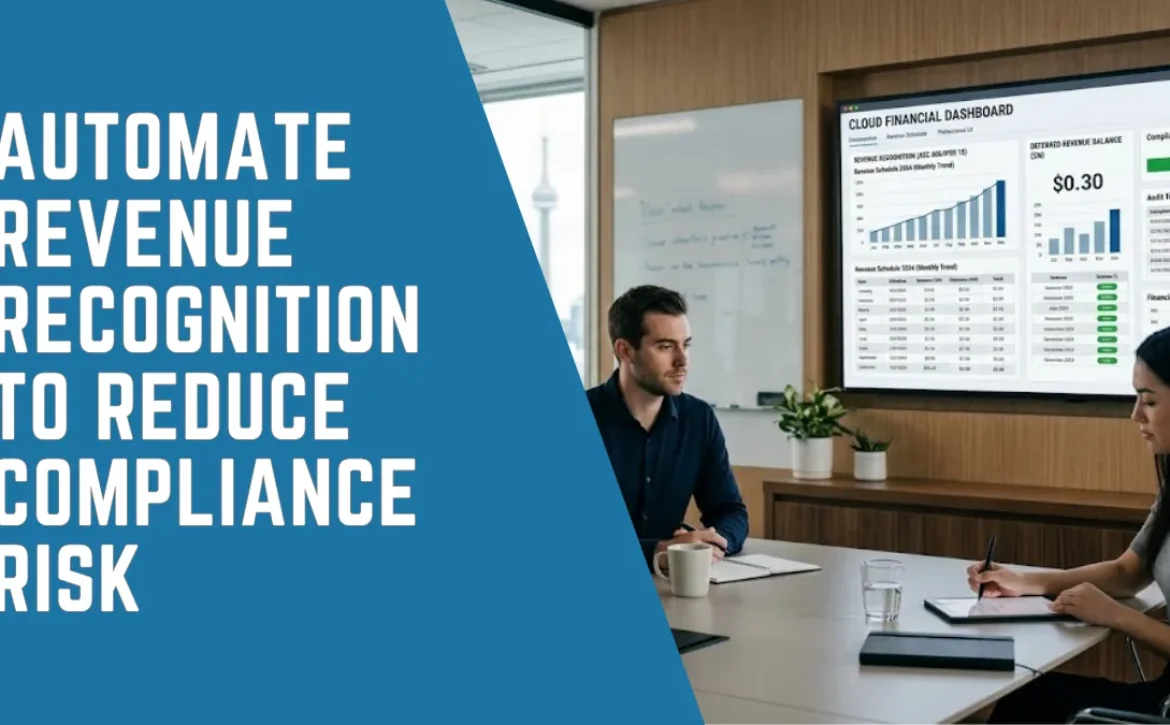
Why Manual Revenue Recognition Creates Compliance Risks—and How Automation Solves Them

Discover how automating revenue recognition helps finance teams reduce compliance risks, eliminate manual errors, improve reporting accuracy, and simplify adherence to accounting standards while increasing operational efficiency.

Read More

What You Need to Know About GDPR Compliance

GDPR complianceNow is the time to ensure your company complies fully with GDPR

If you haven’t heard about GDPR, now is the time to read up on it and ensure that your company complies fully with the new regulations. GDPR provides a comprehensive update of European Union data collection, storage, and usage laws and is the biggest change to these laws since 1995.

In the past two decades, data collection, usage, and storage has undergone a revolution akin to moving from spinning wheels to the mass manufacturing of cloth; in other words, it is a Data Revolution, similar to the Industrial Revolution. Back in 1995, cell phones were just that—phones—and the only way to connect to the internet was through a cumbersome, squealing thing called dial-up that ran through (gasp) an actual telephone line. People didn’t think too much about their data. The worst thing that could happen was an onslaught of junk mail from your data shared to other companies.

Today, the world is quite a different place. We leave data footprints every time we log into our cellphones, laptops, tablets, or other devices. Our likes, dislikes, preferences, ideas, family and friends is all tracked through keystrokes and breadcrumbs.

The new General Data Protection Regulation (GDPR) provides EU citizens with greater control over their personal data and how that data is used and protected, both in Europe and abroad. In this case, “personal data” can refer to everything from name, email, address, date of birth, personal interests, photos, digital footprints, social posts, and more.

“So what?” you may be thinking. “What does that have to do with me? My company is based in Canada.”

That may be true, but if your company conducts business with anyone in the E.U., GDPR applies. The penalties for noncompliance are stiff and range from warnings to millions of dollars in fines. It is vitally important that companies worldwide understand and comply with GDPR.

Fortunately, most businesses already have a tool in place to comply with GDPR: their CRM systems.

Considerations for Compliance

GDPR is a complex law. For most companies who do not actively seek or conduct business in the EU, there are three areas that cover the gist of the law.

  1. Regulations: The GDPR is mainly intended to protect the privacy of EU citizens. The new regulations provide assurance for individuals that their data is not collected and/or used without their express consent. This means that any time an individual submits personal information, the company collecting it has to ensure that consent is given. Consent must be obtained freely—no auto-checked boxes that opt someone in—using plain and clear language. This will impact everything from “contact us” forms on your website to future email marketing campaigns.
  2. Systems: Not only will you need to audit your systems to ensure that information stored within is secured and consent has been given, you’ll also need to ensure that within your company, system users only have the permissions and access privileges they need for their specific role. Certain individual records and data fields, such as tax information or bank account numbers, may need to be restricted from your standard user access.
  3. Legal Impact: Non-compliance is not cheap. Your organization could be fined up to 4 percent of annual global turnover or €20 Million if you are not GDPR compliant. Other fines may also be imposed, such as a 2 percent fine for not having records in order, not notifying when a breach occurs, or not conducting impact assessment.

Updating CRM for GDPR Compliance

You can use your CRM system to validate security and protection for EU customers. A permission pass campaign, a one-time email sent to any contact with an unverified opt-in status asking them to confirm whether or not they still want to receive your emails, is a great first step to help you comply with GDPR. Running this campaign on all your email contacts—not just the ones in the EU—not only keeps you compliant with GDPR, but also cleans your database of those who are no longer finding value in your content, leaving you with those who are much more likely to interact.

Set up your CRM system with the appropriate message and response mechanism and send to all customers, not just those in the EU. Ask everyone to confirm their permission on your list now and save the records to prove that you ran this important compliance step.

Although it may feel risky to run a permission pass or opt-in validation campaign, it is a simple move that could go a long way to help your company comply with GDPR.

For more information about using your CRM system to comply with GDPR or to learn more about Sage CRM, please visit IWI Consulting Group or call 1-866-916-3851.

Read More

Complying with Statutes using Food Industry Software

Over the past month, we have taken a closer look at the Food Safety Modernization Act (FSMA), what it involves, what deadlines it outlines for food manufacturing compliance, and how companies are affected by it. For more information on what the FSMA expects out of businesses your size, visit here. The FSMA is sub-divided into sections that impact different food system areas. Within each area, there are individualized deadlines and schedules. Let’s take a closer look at these areas by exploring statutes pertaining to them that are included in the FSMA.

Statutes within the FSMA

  • Traceability- Of all the elements food manufacturing businesses will be impacted by, they will be most greatly affected by the traceability requirements that are listed in the act in the realm of “food defense.” Existing product tracking requirements are expected to drastically expand once this element is fully defined within the act. In the future, the current requirement of tracing one step in both directions (forward and back) will likely be significantly modified. Even though the defined requirements are yet to be complete, it is important to consider implementing food industry software that will help in creating more accurate and efficient tracking procedures. In order to meet transparency requirements, this should take place along the entire supply chain.
  • Preventive Controls- The idea behind this element is mandating strong food safety plans throughout the food industry. Facility registrations are already mandated throughout the industry, but this is only a starting point of preventive control rules. Next up will be creating food safety plans and dealing with hazard analysis. These statutes will be determined by the end of the year, and compliance will be expected by the end of next year (2016). Again, being prepared by implementing food industry software can be beneficial because hazard analysis and expanded food safety plans will demand the use of it.
  • Verification Programs for Foreign Suppliers- This element of the act requires stringent quality and safety checks on imported products. The Foreign Supplier Verification Program (FSVP) will greatly expand existing required verifications to include more record keeping and extensive verification of proper supplier conduct. The Food and Drug Administration will even be requiring current supplier lists that can be furnished to them at any time. In addition, food manufacturing companies will be required to verify supplier hazard analysis practices and a variety of other checks to be performed.

In order to comply with these statutes and the many others detailed in the FSMA, your company will need food industry software and a renewed emphasis on record keeping, transparency, assessment of risk, and food safety. Enterprise resource planning (ERP) software can be of significant assistance in these areas. ERP for food manufacturers allows your business to keep these records well and leads to increased transparency. In addition, ERP for food manufacturers helps with a variety of business functions and supports.

Sage EM (formerly known as Sage X3) is one example that can help your business track suppliers, lots, and processes and easily provide essential documentation to everyone who needs access. For more information about Sage EM (formerly known as Sage X3), visit here. For further information about food manufacturing regulations and compliance, contact us.


Our small and dedicated team specializes in helping small-to-medium size Canadian businesses and non-profits select and adapt Enterprise Resource Planning (ERP), Customer Relationship Management (CRM), Human Resource Management (HRMS) and IT services. With IWI’s 15 years in business and 100 plus years of combined experience, IWI has helped hundreds of manufacturing, distribution, and financial service companies gain efficiency, grow, and lower their operating costs.

With the unique combination of industry knowledge and diverse technology expertise, IWI provides cost-effective solutions to help clients gain a competitive edge. As a Sage business partner, servicing the Greater Toronto Area, we support evaluation and implementation of operations and finance systems to optimize technology, ensuring high return on investment with a quick and painless transition to new software.


Read More

Deadlines for Food Manufacturing Compliance with Regulations

The Food Safety Modernization Act (FSMA) is increasing regulations and restrictions for food manufacturing companies. Failure to comply with the regulations brings with it the threat of mandatory recalls, enhanced inspections, severe penalties, and more. Visit here for more information about the FSMA, its purpose, the implications and impact, and how regulations can be met.

In addition to understanding the act itself and what it is intended to achieve, it is also important to have a good understanding of the timelines and deadlines associated with it. These carry significant importance for food manufacturing businesses and are required to be met.

The History of the Food Safety Modernization Act

The FSMA was originally signed and put into place in January of 2011. Like most laws and regulations, it takes time to implement the laws contained within it. This is certainly true for the FSMA, and implementation is still in process. The Food and Drug Administration (FDA) gradually releases new regulations following processes that allow for public and industry input. The FDA’s role has expanded significantly since with the new act, but they have only been able to gradually increase their resources which lengthens the implementation timeframes. In 2012, the registration system was implemented. On the contrary, product-tracing required by the new laws was still not finalized in 2014. In 2014, a large number of the act’s statues were approved, but they have yet to be regulated by the FDA and are therefore not yet implemented.

The Current Reality of where the FSMA Stands Today

Of the many facets included in the act, the FDA’s increased inspection schedule has still not been rolled out. This inspection schedule is an important part of the process, but there is still a need for the FDA to have budget increases in order to support this schedule. Food manufacturing companies are not yet subject to these enhanced inspections, but they will be once the funds are greatly increased over the next few years to support them.

The Future Outlook of the FSMA Deadlines

According to the schedule, all rules should be finalized within the FSMA in the beginning of 2016. This will be followed, one to four years later, by compliance deadlines. In essence, the FSMA rules and regulations should all be implemented by 2020. This is a final deadline with the hope being to have these in place even sooner. It is important to note that the size of your company matters in terms of when you must be within compliance. As a general rule, it is the case that the larger the company, the shorter the timeframe for compliance. This is likely due to their increased budget and likelihood of already having food manufacturing software in place to help them follow and uphold rules. The rules involved cover preventive control human food, produce safety, food defense, sanitary transport, third-party accreditation, and more.

In order to meet deadlines and abide by regulations, your business will likely need food manufacturing software to get the job done. This should include enterprise resource planning (ERP) for food manufacturers such as Sage EM (formerly known as Sage X3). This is just one such food manufacturing software that can help in meeting regulations by supporting tracking, accounting, and record keeping.

ERP for food manufacturers can be of significant help in meeting deadlines and ensuring regulations are upheld.


Our small and dedicated team specializes in helping small-to-medium size Canadian businesses and non-profits select and adapt Enterprise Resource Planning (ERP), Customer Relationship Management (CRM), Human Resource Management (HRMS) and IT services. With IWI’s 15 years in business and 100 plus years of combined experience, IWI has helped hundreds of manufacturing, distribution, and financial service companies gain efficiency, grow, and lower their operating costs.

With the unique combination of industry knowledge and diverse technology expertise, IWI provides cost-effective solutions to help clients gain a competitive edge. As a Sage business partner, servicing the Greater Toronto Area, we support evaluation and implementation of operations and finance systems to optimize technology, ensuring high return on investment with a quick and painless transition to new software.
Read More

Don’t Let Compliance Issues Eat Into Your Profits

Food and beverage businesses are subject to many regulations from the Canadian Food Inspection Agency and related environmental, health, and safety acts.  New and changing guidelines and regulations can adversely impact business operations, lead to product recalls, and can put a dent in already slim profit margins.  Gain both insight and control over your business operations and protect your profits by implementing an enterprise resource planning (ERP) solution designed for food and beverage distributors and manufacturers.

Legislation over food and safety practices is constantly changing and some of these more recent changes have facilitated several recalls, pushing the industry to tighten up safety and security practices throughout their supply chains.  You are obligated to keep up with new regulations, make changes needed for compliance, and be able to show proof of that compliance.  Protecting your profits requires greater control over operations, training programs, lot traceability, recordkeeping, and audits to ensure that operations are on the right path.  You can accomplish all this and more with a strong enterprise resource planning (ERP) solution.

Food and beverage businesses can implement a robust ERP solution, such as Sage® ERP, to gain the control and insight needed to manage compliance issues and protect profit margins.  You can manage all of your core business processes from this single, integrated solution including finances, inventory and supply chain, manufacturing and distribution, and other important operations.  Manage labeling requirements and supplier certificates of analysis, comprehensive and multiple-level lot traceability, and automated data collection that is needed for recordkeeping and reporting.  Streamlining data management and recordkeeping for compliance requirements can save valuable time with collecting and analyzing compliance data, as well as support your ability to respond faster to regulatory agencies that may ask for needed data.  A quick response to regulatory agencies shows good faith and reduces lengthy distractions from your day-to-day business responsibilities.  In addition, the faster you can initiate a recall, if one is needed, the better you can control those inevitable costs.

Although the food and beverage industry can be complex and challenging, especially in the face of ever-changing regulations, you can improve productivity and profitability by implementing a strong business management solution.  Contact IWI Consulting Group for more information about using ERP to gain control and insight into compliance activities and protect your bottom line.

By IWI Consulting Group, Sage Authorized Partner in Canada

Read More